
💿 Discography
📖 Biography
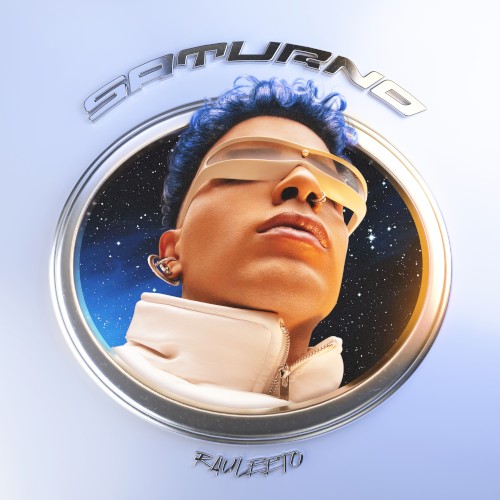
The stage is dark. Only a beam of electric blue light outlines the silhouette of a guy in mirrored sunglasses and a silver suit straight out of an '80s movie. The track fills with a pulsating bass that isn’t pure reggaeton, but neither is it house nor R&B: it’s something that didn’t exist before he invented it. When Rauw Alejandro opens his mouth, his voice doesn’t sound like any other urban artist. It’s not Bad Bunny’s aggressive flow or Anuel’s melancholy. It’s a mix of crooner and MC, with a hint of nostalgia that transports you to a Miami nightclub in 1995—but with the rhythm of a TikTok algorithm. That’s how Saturno sounds, and that’s how the future of the genre sounds.
Raúl Alejandro Ocasio Ruiz—born in San Juan in 1993—didn’t come to follow the rules. He came to rewrite them. While other reggaeton artists settled for commercial success, he became obsessed with aesthetics. Not just musical ones: visual, conceptual, down to the last detail of his music videos. If Latin urban music had long been associated with street culture, Rauw dressed it in haute couture without losing an ounce of authenticity. In a world where "authenticity" is often confused with carelessness, that’s almost an act of rebellion.
From San Juan to the World: A Career That Defies LabelsRauw’s first major statement wasn’t a hit—it was a declaration of intent. Afrodisíaco (2020) proved he could make danceable music without falling into predictability. But it was with Vice Versa (2021) that the world realized he wasn’t just another artist in the genre—he was a visionary. The album is a sonic journey that moves from reggaeton to house, from R&B to dancehall, with a cohesion few achieve. Songs like "Todo de Ti" didn’t just dominate the charts; they redefined what a urban hit could be: melodic yet with a groove that forces you to move, nostalgic yet with a fresh sound.
The secret? Rauw doesn’t compose with algorithms in mind, even though algorithms love him. He composes thinking about how his songs would sound at a party where the DJ is a robot and the guests are human. That tension between the organic and the digital is what makes his music transcend. It’s no coincidence that artists like Drake or The Weeknd have wanted to collaborate with him. It’s not just about his commercial success—though he has plenty—but about his ability to sound universal without losing his Puerto Rican essence.
Rosalía, RR, and the Experiment That Changed Latin PopIf there’s one moment that marked a before and after in Rauw’s career, it was his collaboration with Rosalía. Not just because of the success of "Beso," but for what it represented: the union of two artists who, each in their own way, were redefining Latin music. RR (2023), the EP they released together, was a risky project. It wasn’t a reggaeton album, nor flamenco, nor pop. It was something new—a blend of sounds that didn’t fit into any box, yet worked.
The project sparked debates. Some reggaeton purists saw it as a betrayal; others, as a necessary evolution. Rauw, however, took it for what it was: an experiment. "I’m not interested in doing the same thing over and over," he said in an interview. And that attitude is what sets him apart. While other artists repeat the formula that brought them success, he prefers to burn the ships and sail into the unknown. In an industry that rewards repetition, that’s a risk. But it’s also what has made him one of the most interesting artists of his generation.
More Than Numbers: Artistic Credibility in the Streaming EraRauw Alejandro isn’t just a streaming phenomenon. Sure, his numbers are impressive: millions of plays on Spotify, sold-out stadium tours, collaborations with the biggest names in pop. But what truly sets him apart is his ability to stay relevant without selling his soul. In an era where many artists prioritize commercial success over artistic quality, he has managed to balance both.
His latest album, Playa Saturno (2023), is a perfect example. It’s not an easy listen. It’s not an album full of obvious singles. It’s a conceptual work, with songs that require multiple listens to be fully appreciated. And yet, it worked. Because Rauw doesn’t make music for the moment; he makes music for posterity.
That doesn’t mean he doesn’t know how to play the game. He understands perfectly how the industry works: how to release a single at the right time, how to make a music video go viral, how to stay in the media’s spotlight. But he does it without losing sight of what really matters: the music. And in a world where many artists get lost in the noise, that’s an achievement.
Rauw’s Legacy: Where Is Latin Urban Music Headed?Rauw Alejandro isn’t just an artist. He’s a barometer of what’s to come. His music anticipates trends, breaks barriers, and, above all, proves that reggaeton is no longer a marginal genre. It’s a universal language.
What Rauw does isn’t just innovate; it’s a reminder that Latin music has a history. That reggaeton didn’t emerge from nothing, but from a mix of Caribbean, electronic, and urban sounds. That house, disco, and R&B aren’t enemies of the genre—they’re allies. And that, in the end, what matters isn’t the label, but the emotion the music conveys.
The day Rauw stops surprising us will be the day the genre has nothing new to say. But something tells me that day is still far off.