💿 Discography
📖 Biography
On February 3, 2004, a Los Angeles radio station played Gasolina for the first time during prime time. It wasn't just another track: it was a sonic missile that came from the neighborhoods of San Juan, with a flow that sounded like burnt tires and nights of perreo under neon lights. Ramón Luis Ayala Rodríguez — Daddy Yankee to the world — was not only breaking the language barrier; he was slipping reggaeton into the playlist of white America, something no one had achieved before. And he did it without asking permission.
Born in 1977 in the Río Piedras neighborhood, Yankee grew up between baseball — he dreamed of being a shortstop for the Seattle Mariners — and pirated tapes of Vico C and DJ Playero. At 17, a stray bullet in a shooting left him with a hip injury that closed the doors to the diamond, but opened those of a home studio where he began rapping over dembow beats. At that time, reggaeton was gang music, from housing projects, from places where the police didn't go. Radio stations called it "noise" and critics called it "trash." Yankee, however, saw something different: a genre hungry for greatness.
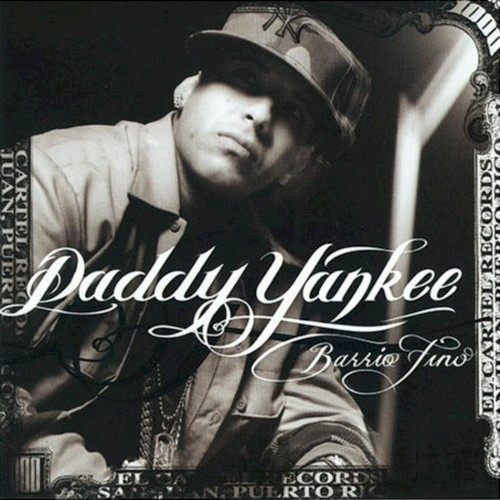
From the housing projects to the Grammys: how Barrio Fino changed everythingIn 2004, Barrio Fino was not an album; it was an earthquake. The record debuted at No. 26 on the Billboard 200 — an unthinkable feat for a Latin artist — and sold half a million copies in its first week. But the most important thing wasn't the numbers: it was the way Gasolina slipped into university fraternity parties, Ibiza after‑hours, and Tokyo taxis. The track had that rare quality in music: it was impossible not to move your feet, even if you didn’t understand the lyrics. “Give me more gasolina,” Yankee repeated, and the world, unknowingly, was asking for much more than fuel.
The success of Barrio Fino was no accident. Yankee understood something others didn’t: reggaeton needed structure, flawless production, and lyrics that transcended the ghetto. While others stuck with the usual "dale, mami," he blended dembow with flamenco guitars (Lo que pasó, pasó), with salsa (No me dejes solo) and even with rock (Corazones). It was neighborhood music, yes, but with stadium ambition. And the stadiums responded: in 2005, he filled Madison Square Garden for the first time as a Latin urban artist. The press called it "the concert that proved reggaeton wasn’t a fad." They were wrong: it was the future.
Despacito and the moment the world danced in SpanishIf Gasolina was the opening shot, Despacito was the halfway goal. In 2017, Yankee and Luis Fonsi released a track that seemed engineered in a lab to break records: a catchy rhythm, a sensual yet not vulgar lyric, and a video filmed in La Perla, a San Juan neighborhood that few tourists dared to step into. The result was a cultural bomb. The song stayed 16 weeks at No. 1 on the Billboard Hot 100 — something that hadn’t happened since Macarena in the ’90s — and the video surpassed 8 billion views on YouTube, becoming the most‑watched video in history for years.
But beyond the numbers, Despacito did something deeper: it normalized Spanish in global music. Justin Bieber recorded a remix, Beyoncé sampled it in Mi Gente, and suddenly artists like Bad Bunny and Rosalía were no longer "exotic" to the mainstream. Yankee, who had always been a strategist, summed it up in an interview: "I didn’t sell culture, I sold a product. But that product carried the culture inside."
The retirement that wasn’t a goodbye, but a "see you later"In March 2022, Yankee announced La Última Vuelta World Tour. It wasn’t an impulsive decision: he had been talking for years about his Christian faith and his desire to devote himself to other projects. But the reggaeton world — and its fans — weren’t ready. The tour, which visited 30 cities across three continents, was a phenomenon: tickets sold out in minutes, stadiums packed, and a setlist that was a journey through 25 years of history. At his final concert in Puerto Rico on December 10, 2022, Yankee closed with Gasolina and a line that resonated more than any beat: "This is not a goodbye, it’s a see you later."
His legacy, in any case, was already written. Yankee didn’t just popularize reggaeton; he professionalized it. Before him, Latin urban artists were seen as local phenomena. After him, they were global stars with multimillion‑dollar contracts, international tours, and collaborations with the biggest names in pop. Bad Bunny, J Balvin, Karol G and even Ozuna owe him something: the path he cleared with a machete.
The king who never needed a crownThere is something that defines Daddy Yankee beyond records and awards: his ability to reinvent himself without losing his essence. In the ’90s, he was the street kid rapping over DJ Nelson’s beats. In the 2000s, he became the architect of modern reggaeton. In the 2010s, he was the bridge between the genre and global pop. And in the 2020s, he proved that you could retire at the top without falling into the cliché of an artist who refuses to put down the microphone.
Perhaps that’s why his influence remains intact, even off the stage. Today, reggaeton dominates Spotify charts, the Grammy Awards have a category for urban music, and artists like Rauw Alejandro blend the genre with electronic and R&B. All of that started with a guy from San Juan who, instead of lamenting a bullet that ruined his dream of becoming a baseball player, grabbed a microphone and decided his voice would change the game.
And boy, did he achieve it.