
💿 Discography
📖 Biography
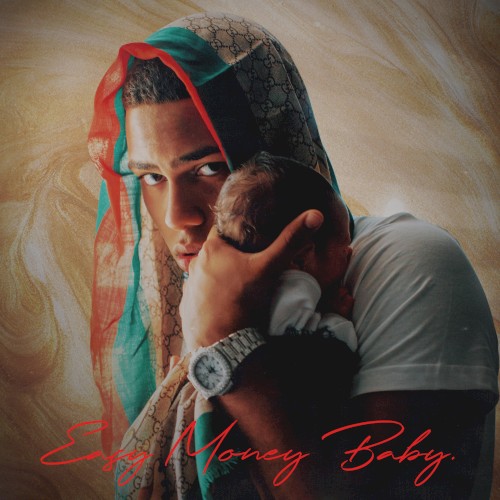
On January 15, 2020, Easy Money Baby landed on platforms with surgical precision. There was no prior hype, no massive leaks, no intrigue campaigns. Just an album that, in a matter of hours, made it to the Top 5 of the Billboard Latin Albums. That day, Myke Towers proved what many in the industry already suspected: that his name was not a fleeting phenomenon, but that of an artist who had come to redefine consistency in reggaeton.
Michael Torres Rivera (San Juan, 1994) is not the typical case of overnight success. He didn't have a "Despacito" that catapulted him to stardom overnight. His rise was more like building a building: brick by brick, song by song, without haste but without pause. While other artists in the genre rely on a couple of singles to stay relevant, Towers has made constant production his hallmark. And not just any production: his has a rare quality in today's urban scene, where the ephemeral reigns. His songs don't sound like album fillers. They sound necessary.
The sound that can't be labeledListening to Myke Towers is like entering a studio where someone has mixed, with a firm pulse, the dark beats of Atlanta trap with the catchy melodies of classic reggaeton. It's not a clumsy hybrid, but a fusion that works because he himself seems to move naturally between both worlds. In "La Jeepeta" (with Brray, Juanka, and Anuel AA) he sounds like he was born on a dembow, but in "Michael Myers" —from the same album— he ventures into a territory closer to Latin drill, with a crudeness that few in the genre dare to explore.
This versatility is no accident. Towers grew up listening to everything: from 2000s reggaeton to American hip-hop. And it shows. While other artists in the genre repeat formulas until exhaustion, he plays with contrasts. A clear example: LYKE MIKE (2021), his second studio album, opens with "Mi Nena", a romantic song with bachata touches, and closes with "Perreo Pesau", a party anthem that sounds like sweat and neon lights. The result? An album that doesn't feel like a collection of songs, but like an experience.
The collaborator who doesn't get lost in the featuringIn reggaeton, collaborations are often a double-edged sword. They either elevate the guest artist or bury them under the weight of the bigger name. Towers, however, has a gift: when he appears on a track, he doesn't just bring his voice, he transforms the song. He's not the typical artist who records a verse and leaves. He takes ownership of the beat, imprints his flow, and almost always ends up stealing the show.
Just listen to "La Santa" with Bad Bunny. Towers doesn't just follow the rhythm; he challenges it, stretches it, makes it his own. Or "Ley Seca" with Rauw Alejandro, where his verse —short but lethal— completely changes the energy of the track. Even in "La Nota" with Manuel Turizo and Rauw, where the protagonism could have been shared among the three, his presence is the one that resonates.
This isn't luck. It's craftsmanship. Towers studies every beat, every lyric, every space left for him. And when it's his turn to lead, like in "Me Porto Bonito" (with Bad Bunny), he shows that he can be the center of attention without needing to shout. His voice, deep and serene, contrasts with that of other artists in the genre who resort to autotune or screams to get attention. He prefers the elegance of strategic silence.
The secret: not selling smokeIn an industry where going viral is key, Myke Towers has built his career doing just the opposite: ignoring fleeting trends. He doesn't record a song because "it's trending on TikTok," nor does he change his style because "melodic is in now." His formula is simpler and, at the same time, riskier: making good music and trusting that the public will notice.
And they do notice. His albums are not collections of loose singles, but cohesive projects. Easy Money Baby and LYKE MIKE not only debuted in the top spots of the Billboard Latin Albums; they stayed there. Weeks, months. Because they're not albums to consume and forget, but to return to. Songs like "Diosa" or "La Playa" don't age. They don't sound like "2020 product." They sound like potential classics.
This doesn't mean Towers is perfect. He has detractors —like any relevant artist— and there are those who criticize him for being "too commercial" or "not risky enough." But even those critics recognize something: he never disappoints. In a genre where ups and downs are the norm, he's the exception. He doesn't have a hit that defines him because, in reality, all his songs could be that hit.
What's next for Myke Towers?If anything has been proven by this Puerto Rican, it's that he doesn't need to follow the rules of the game to win. While other artists obsess over streaming numbers or awards, he remains focused on what truly matters: the music. And that, in a world where the ephemeral reigns, is almost an act of rebellion.
What is clear is that his next move will be scrutinized. Not because the world is waiting with bated breath, but because, after years of consistency, no one dares to underestimate him. Towers is not the artist of the moment. He's the artist who, when the moment passes, will still be there. Like those buildings that withstand hurricanes: not because they're indestructible, but because they're built to last.
And that, in reggaeton, is rarer than a diamond.