💿 Discography

📖 Biography
On March 24, 2017, Spotify crashed. Not because of a technical glitch, but because half the world hit play at the same time. The track was "Te Boté", a song that Ozuna stitched together with Casper, Nio García, Darell, Nicky Jam and Bad Bunny. In less than 24 hours, the track surpassed five million streams. It wasn’t a coincidence: it was the first warning that the Puerto Rican wasn’t coming to join the game, but to change it.
Juan Carlos Ozuna Rosado — born in San Juan in 1992, raised between Villa Palmeras and Carolina — arrived late to the reggaeton boom. When Don Omar and Daddy Yankee already dominated the radios, he was still selling shoes in a neighborhood store to help his mother. But the timing he lacked was compensated by an almost obsessive devotion to the sound. While other artists were satisfied with repeating formulas, Ozuna locked himself away to study every beat, every flow, every transition. The result was not just an artist, but a hit‑making production system.
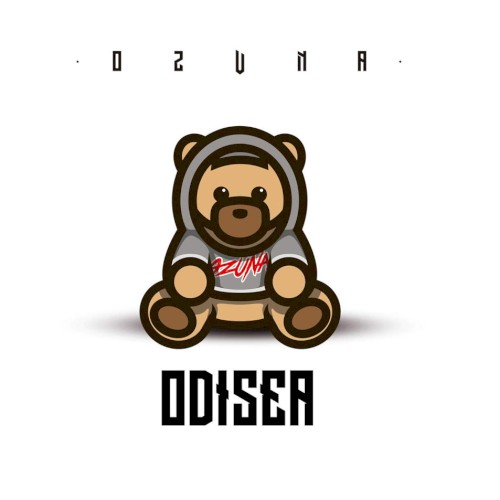
The Ozuna method: romance with factory rhythmHis voice — that blend of melancholy and rasp that sounds like it was recorded in a damp hallway — became his trademark. But what really set him apart was his ability to industrialize success. While his peers released two or three tracks a year, Ozuna dropped whole albums as if he were turning on a faucet: Odisea (2017), Aura (2018), Nibiru (2019), ENOC (2020). Each with more than a dozen songs, each with hit potential.
The secret wasn’t in the quantity, but in the precision. Ozuna understood before anyone else that reggaeton had stopped being a genre and had become an algorithm. His lyrics — always hovering between heartbreak and party — were designed to work in three scenarios: the after‑party, the Uber ride and the 15‑second TikTok. Songs like "La Modelo" or "Dile Quién" are not just tracks: they are success templates. And most importantly: they work just as well in a concert in Madrid as in a club in Medellín.
That said, not everything is calculation. There’s something in his music that escapes streaming logic. When he sings "Tú me dejaste de querer / cuando te necesitaba más" in "Imaginando", it doesn’t sound like a product. It sounds like a guy who just broke up with his girlfriend and is telling a friend about it in a bar in Santurce. That authenticity — or the illusion of it — is what has saved him from becoming another playlist artist.
The king of collaborations (and of records nobody asked for)Ozuna doesn’t collaborate: he collects. His list of features looks like a who’s‑who of urban music: Bad Bunny, J Balvin, Cardi B, Nicki Minaj, Anuel AA, Karol G. But unlike other artists who get lost in the sea of names, he always ends up as the protagonist. It’s no coincidence that in "Te Boté" — that six‑minute monster with six artists — people remember his verse more than Nicky Jam’s.
His records are so absurd that it’s almost a chore to list them. More than 50 songs with over 100 million streams on Spotify. The first Latin artist to surpass 30 billion streams. Albums that debut at No. 1 on Billboard Latin Albums as if it were normal. But the fact that best defines his impact isn’t a number, it’s a cultural phenomenon: in 2023, "La Bachata" became the most‑watched Latin song in YouTube history, overtaking classics like "Despacito". And it did so without a remix with Justin Bieber.
That doesn’t mean everything has gone perfectly. His foray into film (Tom Clancy's Without Remorse) was received with indifference, and some of his latest albums — such as Cosmo (2023) — have been criticized for being repetitive. Yet even his failures have something admirable: Ozuna doesn’t stop. While other artists take years between projects, he keeps releasing music as if the world were ending tomorrow.
The future of reggaeton (and why Ozuna no longer needs to prove anything)There’s a moment in Ozuna’s career that defines him better than any award. It was in 2022, during a concert at the Coliseo de Puerto Rico. In the middle of the show, he stopped the music and said, "Look, I know you came to dance, but I want you to hear this." And then he sang "Devuélveme", a raw ballad, without beats, just his voice and a guitar. The audience went wild. It wasn’t what they expected, but it was exactly what they needed.
That’s Ozuna today: an artist who no longer needs to follow rules because he wrote them himself. While the new generation of reggaetoners — Rauw Alejandro, Feid, Young Miko — struggles to find their voice, he is already in another phase. It’s not that he has abandoned the genre, but that he has transcended it. His music is no longer just for dancing: it’s for living with it. Songs like "Se Preparó" or "El Farsante" aren’t just hits; they are generational anthems that people will keep singing when today’s reggaeton sounds as outdated as 90s merengue.
And the best part is that he’s not finished yet. At 32, Ozuna has another decade ahead. Time will tell if he manages to reinvent himself or becomes a living legend, but one thing is certain: when the history of reggaeton is written, his name won’t appear in a chapter. It will fill an entire book.