
💿 Discography
📖 Biography
The stage lights up in golden tones. A tight dress, knee‑high boots and a blonde mane that seems to defy gravity. Paulina Rubio doesn’t walk in: she bursts in. She doesn’t sing, she commands. And the audience obeys. Thirty years after her first hit, she remains the only artist who can fill a stadium with a heel‑laden choreography and a smile that says, "This is mine."
Born in 1971 in Mexico City, but her destiny was written on stages. At eight she was already part of Timbiriche, the children’s group that shaped an entire generation. However, Paulina was not just another voice in the choir. While her peers sang with innocence, she looked at the camera as if she knew the whole world was watching her. When she leapt to solo stardom in the ’90s, she did it with a record that bore her name and an attitude no one had seen before in Latin music: Paulina (2000) was not an album, it was a war declaration against boredom.
The sound that defined an era (and no one has been able to copy)If 90s Latin pop had a manual, Paulina Rubio burned it and danced on its ashes. Her music didn’t just blend genres: she crushed them and served them with a cocktail of ’80s synths, electronic beats and lyrics that swung between heartbreak and nonstop party. Lo que soy (1992) was her first anthem, but it was with Ni una sola palabra (2006) that she proved she could dominate ballads without losing her rebellious essence. The secret? A voice that sounds as if it’s about to laugh at you —or with you— at any moment.
But her true genius lay in understanding that pop was not just music: it was theater. While other artists settled for pretty music videos, Paulina turned every appearance into a show. In Baila casanova (2002) she danced in a sheer dress and a charro hat; in The One You Need (2004) she hung from a trapeze as if danger didn’t exist. It wasn’t cheap provocation: it was strategy. She knew that in a market saturated with ballads, the only way to stand out was to be unforgettable. And she certainly achieved that.
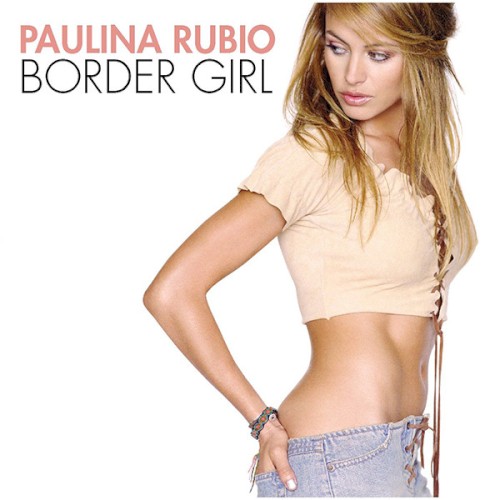
The English crossover in 2002 with Border Girl was a risky move. Many Latin artists tried and failed, but Paulina didn’t just sing in English: she conquered it. Tracks like Don’t Say Goodbye played on U.S. radio without sounding forced, something even Shakira hadn’t managed yet. It wasn’t an adaptation: it was an invasion.
The pop survivor: how to stay relevant when the world forgetsThe music market changes every five years. Yesterday’s idols become nostalgic memories, and new artists arrive with algorithms under their arms. Paulina Rubio, however, is still here. Not by luck, but because she understood something many have forgotten: pop is not just music, it’s culture. And culture feeds on characters.
When record labels started to crumble, she reinvented herself as a judge on talent shows. It wasn’t a plan B: it was a masterstroke. On La Voz México or Mira quién baila, she didn’t evaluate voices or dance steps. She evaluated attitudes. And the audience noticed. While other judges gave technical advice, Paulina reminded everyone that the show is not about perfection, but personality. "If you don’t have charisma, better devote yourself to something else," she once said. It wasn’t advice: it was a verdict.
Her detractors —who she has plenty of— argue that her music no longer plays on the radio. But success isn’t measured only in streams. Paulina Rubio still fills stadiums across Latin America, still graces magazine covers and is still invited to events where her mere presence guarantees headlines. How many artists can say the same after three decades? Few. Very few.
In 2020, during the pandemic, she released La reina está de vuelta, an EP that sounded like a manifesto. It wasn’t a record for the charts, but for her fans: a reminder that even if the world stopped, she was still there. And most importantly: she was still herself. No filters, no apologies.
The legacy of the Golden Girl: more than an artist, a phenomenonPaulina Rubio is not just a singer. She is a symbol. For the women who grew up listening to her, she represents the freedom to be imperfect and still succeed. For critics, she is an enigma: how can someone with such an uneven career remain relevant? The answer is simple: because she never took herself seriously. Or rather, she never took the rules seriously.
Her scandals —which she has had—, her controversies and even her commercial failures are part of her legend. In a world where artists strive to be flawless, Paulina always bet on the opposite: being human. And that, in the end, is what makes her eternal.
Today, when Latin pop is dominated by urban sounds and fleeting collaborations, her music still sounds fresh. Not because it’s vintage, but because it was never a trend: it was an attitude. And attitude, when authentic, never goes out of style. Never.
So the next time someone says Latin pop isn’t what it used to be, play Ni una sola palabra and watch how people keep singing every word, as if time hadn’t passed. Because with Paulina Rubio, time doesn’t exist. Only the spectacle exists. And the spectacle, as she knows well, never ends.