
💿 Discography
📖 Biography
Madrid, summer 2021. A guy in a jacket without a tie and round sunglasses takes the stage at the WiZink Center. He doesn't rap, he doesn't lip‑sync, he doesn't drop clichés. He sings boleros with a cracked voice, kneels before La Niña Pastori in a pure flamenco duet, and when the audience expects the chorus of Demasiadas Mujeres, he launches a vallenato that sounds like it came from a square in Cartagena de Indias. It's not a concert. It's a statement of principles: Spanish pop is no longer written in English nor produced in Miami studios. It's made here, with what we have, but looking at it from above.
Behind that show is Antón Álvarez Alfaro (Madrid, 1990), a guy who started recording demos in his bedroom under the name Crema and ended up signing with Sony after Antes de Morirme —his collaboration with Rosalía— became the unofficial anthem of half of Spain. But reducing C. Tangana to a mere commercial phenomenon would be like saying Picasso only painted ladies with fans. His thing is something else: an obsession with dismantling genres until they become unrecognizable, mixing them with surgical precision and then selling them as if they had always been there.
From the underground to controversy: the metamorphosis no one saw comingBefore becoming C. Tangana, Antón was Crema, a kid from the Salamanca neighborhood who rapped over dirty beats and lyrics about bottle‑night parties and middle‑class frustrations. Early‑2010s Madrid was not what it is now: trap hadn't exploded yet, reggaetón was heard in seedy clubs, and underground rap lived in small venues and internet forums. Crema was just another one in that ecosystem, but with one difference: being good wasn't enough. He wanted to be different.
And he certainly achieved it. When in 2015 he reinvented himself as Palomitxo —a more pop alter ego, with songs about love, partying and self‑destruction— the purge was immediate. Old‑school rappers called him sold out. Critics called him opportunistic. Fans called him a traitor. But he kept moving forward, as if he knew something the others didn't see: that Spanish rap was about to become too small, and that the future lay in breaking the barriers between the commercial and the artistic, between the Latin and the Castilian, between flamenco and R&B.
That instinct led him to sign with Sony in 2019, a move many interpreted as the ultimate surrender to the industry. But C. Tangana is not one to give up. He's one of those who use the industry as a toy.
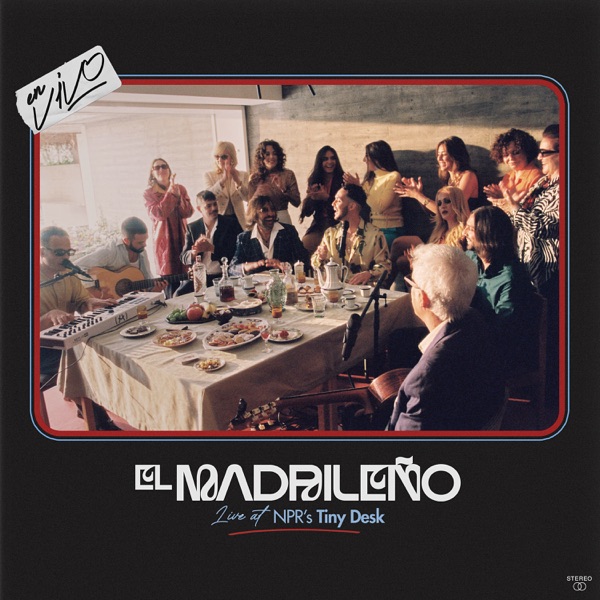
El Madrileño: when an album becomes a manifestoIf there’s a moment when C. Tangana stopped being just another artist and became a cultural phenomenon, it was El Madrileño (2021). It’s not just an album. It’s a time‑traveling journey: it starts with an a‑cappella bolero (Demasiadas Mujeres) and ends with a rumba that sounds as if it were recorded in a 1970s tablao (Nunca Estoy). In between, there’s cumbia, vallenato, flamenco, pop, electronic music and even a nod to the Madrid scene in Tú Me Dejaste de Querer, where the bass sounds as if Alaska and Los Pegamoides had resurrected to record a track with Rosalía.
But the most interesting thing isn’t the genres, but how he uses them. C. Tangana doesn’t fuse for the sake of fusing. He doesn’t drop a flamenco cajón into a trap song just because. Every element is calculated to tell a story. El Madrileño is, at its core, an album about identity: Spanish, Latin, that of a guy who grew up listening to Camarón and 50 Cent, who danced reggaetón in Lavapiés clubs and now strolls through the Prado museums as if they were his home.
The collaborations are another triumph. They’re not names thrown in at random to sell records. Jorge Drexler gives depth to Nominao, a track that talks about the loneliness of success. La Niña Pastori lifts Te Olvidaste to the status of an instant classic. And Niño de Elche, with his voice from another century, turns Ingobernable into an almost religious experience. Even Omar Apollo, an American R&B artist, fits like a glove on Muriendo de Envidia, a song that sounds like Miami but smells like Madrid.
The result is an album that sounds unlike anything ever made before in Spanish. And that, at a time when Latin music dominates the world, is saying a lot.
More than music: an aesthetic universeC. Tangana isn’t satisfied with just making songs. He needs to create worlds. And El Madrileño is not only an album, but an audiovisual project that includes music videos filmed at the Palacio de Cibeles, the Prado Museum and the Las Ventas bullring. Black‑and‑white images, references to classic Spanish art, choreographies that look like they were taken from a Velázquez painting. Everything is designed so the viewer feels they are facing something bigger than an album.
This approach earned him awards at film and television festivals, but also criticism. Some accused him of being pretentious. Others of being opportunistic. Yet he keeps moving forward, as if he knows that art isn’t judged by what it is in the moment, but by what it leaves behind. And El Madrileño has already left something: proof that Spanish pop can be ambitious, sophisticated and popular at the same time.
Is C. Tangana the best artist of his generation? That depends on who you ask. What’s clear is that he’s the only one who has achieved something that seemed impossible: turning an album of boleros, cumbias and flamenco into a massive hit without losing an ounce of credibility. And that, in a world where the commercial and the artistic usually travel separate paths, is no small feat.
In the end, perhaps C. Tangana’s greatness lies not in what he does, but in how he does it. He doesn’t limit himself to following the rules. He rewrites them. And that, in a country where popular music often lives on repeated formulas, is a revolution in itself.