
💿 Discography
📖 Biography
The accordion sounds before the drums. It's not a production error, but Julieta Venegas' signature: an instrument that smells of the north, of border dust, of cantina afternoons and songs that don't know genres. When in 2003 she released Andar conmigo on the radio, something clicked. It wasn't just a catchy song; it was a manifesto. "I want to walk with you without a fixed route," she sang, and half a continent felt identified. Not by chance. Venegas doesn't compose to fill stadiums, but to fill silences.
Born in Tijuana in 1970, her music doesn't have a passport. Or rather, it has several. In the 90s, when Spanish-language rock was torn between protest and sugary pop, she was already playing in Tijuana No! with a mix of punk, ska, and traditional sounds that would later define her solo career. She wasn't the typical singer who arrives in the capital with a demo under her arm. She was a Tijuana native who carried the border in her voice, in the chords, in the way of making local sound universal without losing a gram of authenticity.
The sound that crossed borders (without asking permission)If something defines Venegas, it's her ability to take seemingly opposing elements and make them fit like puzzle pieces. In Bueninvento (2000), her second album, alternative rock shares space with bolero, corrido, and even tango. It's not fusion for fusion's sake, but necessity. "Music doesn't have to apologize for being popular or intellectual," she once said, and this album proves it. Songs like Sería feliz or Hoy no quiero are proof that you can be profound without resorting to cheap drama.
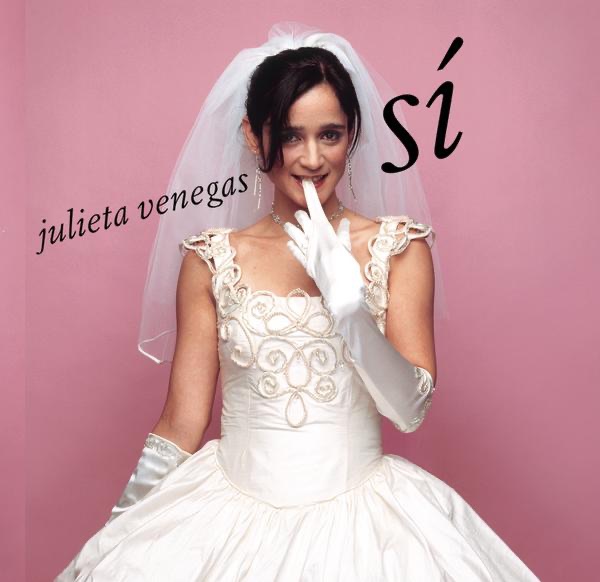
But it was Sí (2003) that catapulted her to the mainstream without anyone — including herself — having to sell their soul. The album sold over a million copies, won a Latin Grammy, and turned Andar conmigo into a generational anthem. What's the secret? It doesn't sound like a product. There's something in Venegas' voice, between whispering and firm, that makes even the simplest songs sound like confessions. "It's not the same, it's not equal," she repeats in Lento, and one thinks: of course not. She doesn't sing to be admired, but to be understood.
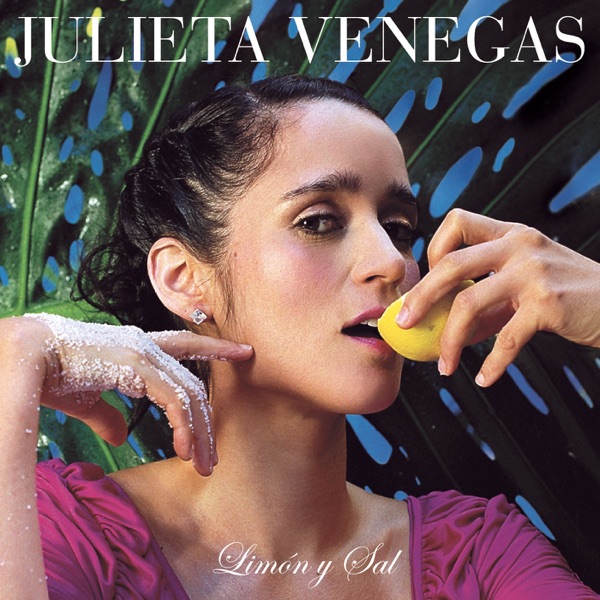
Then came Limón y sal (2006), an album that smells like freshly made lemonade and summer nights. Here, the accordion is no longer a guest, but the host. Tracks like Me voy or Eres para mí (with Anita Tijoux' collaboration) are pop in the best sense: accessible but not simplistic, danceable but with lyrics that withstand multiple listens. The album won another Latin Grammy and consolidated her place in the industry, but what's most interesting is how she avoided repetition. Each Venegas album is new territory, always with that unmistakable seal: the mix of the intimate and the collective, the personal and the political without needing banners.
Lyrics that make no concessions (not even to love)There are artists who write love songs like postcards. Venegas writes them like letters without a sender. Her lyrics don't idealize or romanticize; they observe, question, and sometimes even ironize. In El presente ("Don't tell me no if you know it's yes"), love is a game of glances and silences. In Algún día ("Some day I'll tell you no"), it's a decision, not a destiny. Even in Lento, that hit everyone hums, there's a delicious ambiguity: is she asking for patience or warning that things won't change?
This brutal honesty is what has connected with generations of women — and men — who got tired of pop clichés. Venegas doesn't sing about prince charming or eternal love; she sings about independence ("I don't need a man to be happy"), about solitude that doesn't hurt ("I'm leaving, even if it hurts me"), about everyday life without sugarcoating. In an industry that often infantilizes women, she has always spoken from adulthood without losing freshness.
And then there's humor. Few artists in Spanish use sarcasm with such elegance. In Canciones de amor ("Don't tell me you love me, tell me you need me"), heartbreak becomes a shared joke. In Despedida ("I'm leaving, but I'm not leaving"), irony is so subtle it almost goes unnoticed. It's the kind of intelligence that doesn't need to shout to be heard.
The influence that can't be measured in awards (although she has many)Julieta Venegas has four Latin Grammys, one Anglo Grammy (for her collaboration on No by Café Tacvba), and a career spanning over three decades. But her true legacy isn't in the trophies, but in how she redefined what a Latin artist could be in the global industry. In the 2000s, when reggaetón and more commercial pop dominated the airwaves, she proved that you could be successful without renouncing complexity. That the accordion could sound on a rock stage. That a woman could sing about desire without falling into stereotypes.
Artists like Carla Morrison, Ximena Sariñana, or even Natalia Lafourcade have acknowledged her influence. But beyond the names, it's the fact that her music still sounds in unexpected places: in a Buenos Aires bar, at a Mexico City party, in someone's car who doesn't know anything about her but hums Eres para mí without knowing why they like it so much. That's what makes an artist great: their music transcending the moment it was created.
Today, with over 50 years and a career that shows no signs of exhaustion, Venegas remains an enigma. She's not the typical star who seeks to reinvent herself every two years to stay relevant. Nor is she the artist who clings to a past sound. She's simply herself: a woman who makes music because she doesn't know how to do anything else, and does it with a coherence that many would envy.
In a world where pop is often disposable, Julieta Venegas is one of those artists who, every so often, reminds you why music matters. Not because of the awards, or the numbers, or the trends, but because at some point, one of her songs saved you from an awkward silence. Or made you feel less alone. Or reminded you that, in the end, we all carry a border within.