
💿 Discography

📖 Biography
On January 12, 2017, a video uploaded to YouTube with no major expectations began accumulating plays at a pace no one had seen before. It was not a Hollywood trailer, nor a viral meme, nor a TikTok challenge. It was Despacito, a Spanish song that, in a matter of months, would become the unofficial anthem of half the planet. Behind that phenomenon was Luis Fonsi, a Puerto Rican with a velvety voice who had been building a modest career for two decades until, suddenly, the whole world fell at his feet.
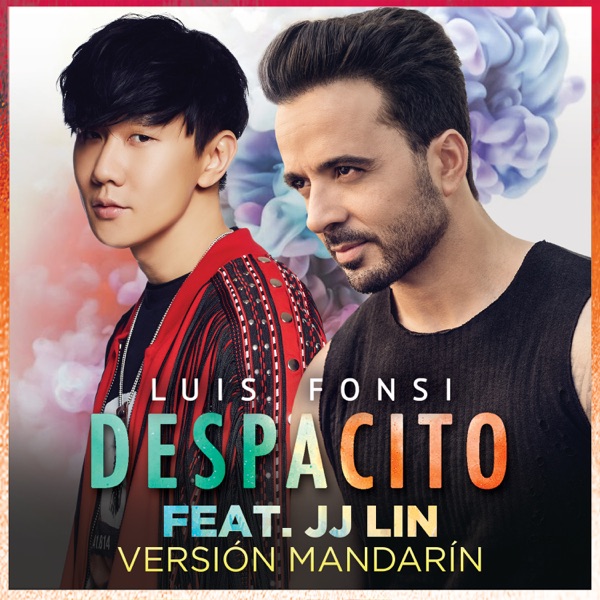
Born as Luis Alfonso Rodríguez López-Cepero in San Juan in 1978, Fonsi grew up among boleros and ballads, but his leap to fame did not come with a romantic track, but with an explosion of reggaeton pop that changed everything. Despacito was not just a hit: it was a cultural earthquake. With Daddy Yankee as a travel companion, the song slipped into the charts of countries where Spanish used to be a background language, not a foreground one. When Justin Bieber joined the party with his remix, the track stopped being "a Spanish song" and became "the song."
The fact that best summarizes its impact: Despacito was the first video to surpass 5,000 million views on YouTube. It was not achieved by an Anglo-Saxon artist, nor by a teenage phenomenon, but by a 39‑year‑old guy singing about "a rhythm that makes you enjoy." That, in 2017, was revolutionary. Reggaeton, until then a genre with bad press and well‑defined borders, proved it could be universal. And Fonsi, without intending it, became its most unexpected ambassador.
From ballads to global anthems: the career nobody saw comingBefore Despacito, Luis Fonsi was already a known name in the Latin pop world. His debut in 1998 with Comenzaré positioned him as a promise of Spanish romanticism, with a voice that seems made to whisper in the ear. Songs like Nada es para siempre or Aquí estoy yo —the latter, a solidarity anthem after the 2010 Haiti earthquake— solidified his reputation as the "prince of ballads." But no one, not even he, imagined that his greatest legacy would arrive with a dembow rhythm.
The curious thing is that Despacito was not a calculated twist. Fonsi had been exploring sounds for years, but always within his comfort zone: pop with tropical touches. The collaboration with Daddy Yankee emerged almost by chance, as an experiment among friends. "I wanted to do something different, but without losing my essence," he confessed in an interview. The result was a song that, paradoxically, sounded both familiar and revolutionary. It had the catchy structure of a pop hit, but the DNA of pure reggaeton.
The success of the track reopened a debate that had been simmering for years: can Spanish compete with English in the global music industry? The answer, thanks to Despacito, was a resounding yes. But not only that: it proved the market was not a zero‑sum game. The song did not displace Anglo‑Saxon artists; it forced them to look south. Suddenly, collaborations like Beyoncé with J Balvin or Ed Sheeran with Camilo stopped being rarities and became the new normal.
The Fonsi few know: more than a hitIf you ask someone on the street who Luis Fonsi is, they will probably answer with two words: Despacito. But reducing his career to a single track is like judging Picasso only by Guernica. Before the global explosion, Fonsi had already sold millions of records, won Latin Grammy awards, and built a loyal fan base that followed him from his first albums.
His discography is a journey through Latin pop over the last two decades. From the teenage romanticism of Comenzaré to the maturity of Vida (2019), passing through collaborations with artists such as Alejandro Sanz or Demi Lovato. Songs like Échame la culpa —another massive hit, this time with Demi— proved his talent was not a one‑day flower. Even in tracks where reggaeton was not the protagonist, Fonsi managed to adapt to trends without losing his identity.
But if there is something that defines his style, beyond the rhythms, it is his voice. That ability to convey emotions with a whisper or a contained shout. He is not the type of singer who needs vocal acrobatics to impress; his strength lies in subtlety, in that way of making a ballad sound intimate even when heard by millions. In many ways, he is the perfect antidote to the era of autotune and disposable hits.
The legacy of Despacito: a before and after?Five years after its release, Despacito remains a difficult-to‑match phenomenon. Not only for its figures—over 8,000 million streams on Spotify, YouTube records, awards everywhere—but for what it represented. It was the song that proved Spanish could be mainstream without complexes, that reggaeton was not a niche genre, and that a Latin artist could dominate charts without singing in English.
But was it really a turning point? The answer is ambiguous. On one hand, it opened doors: today it is normal to see artists like Bad Bunny or Rosalía headlining international festivals. On the other, the success of Despacito also generated a wave of imitators, many of them with copied formulas that saturated the market. Fonsi, aware of this, has avoided falling into the trap of repeating himself. "I don't want to be the type of Despacito", he has said on several occasions. "I want to keep exploring, even if that means taking risks."
What is clear is that his name has been etched into music history. Not as a one‑hit wonder, but as the artist who, almost unintentionally, changed the rules of the game. Today, when you hear Despacito at a party in Tokyo, in a bar in Berlin or in a taxi in New York, it is easy to forget that there was a time when Spanish was an invisible language to the global industry. Fonsi not only made it visible: he made it dance.
And that, in the end, is more important than any record.