
💿 Discography
📖 Biography
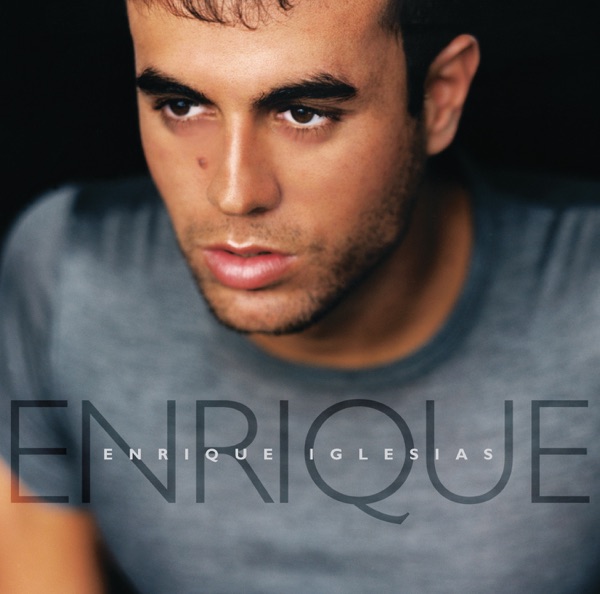
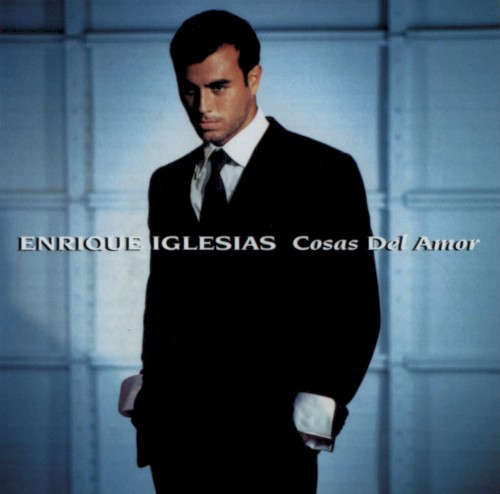
Imagine that in 1999, with the world celebrating the end of the century between residual grunge and Britney’s *teen pop*, a 24‑year‑old Spaniard bursts onto U.S. radio with a Spanish song. It isn’t just any track: it’s Bailamos, an anthem that sounds like an Ibiza party but with the polished production of a Los Angeles hit. People don’t just dance to it; they hum it in English without understanding the lyrics. That was the first warning: Enrique Iglesias wasn’t coming to ask for permission.
Son of Julio Iglesias —yes, the one who sold 300 million records singing about love in seven languages—, Enrique could have settled for inheriting the throne. But he wanted his own. And he built it. With 27 number‑ones on the Billboard Hot Latin Songs (an absolute record, by the way), more than 170 million records sold, and collaborations ranging from Pitbull to Romeo Santos, his career is not a succession of hits but a manual on how to dominate three decades of the music industry without falling into complacency.
The formula no one could copy (and he never fully explained it)There’s something unsettling about Enrique Iglesias’s consistency. It’s not just that his songs play everywhere —from Miami nightclubs to Buenos Aires bars—, but that they do so always. While other 90s Latin artists disappeared with the turn of the millennium or stayed anchored in their original sound, he mutated without losing his essence. How?
First, he understood that Latin pop was not a genre, but a state of mind. His romantic ballads (Hero, Cuando me enamoro) have the same intensity as his dance tracks (I Like It, Subeme la Radio), but with a key detail: the former sell nostalgia; the latter, euphoria. And both, well executed, are addictive.
Second, he mastered the art of collaboration as a commercial weapon. It’s not just about adding names to his credits list —though that helps—, but about choosing partners who amplify his reach without diluting his identity. Pitbull gave him access to the Anglophone market; Wisin & Yandel, urban credibility; Descemer Bueno, a touch of Cuban authenticity. Each alliance was a calculated move, but never forced. That’s the difference between an artist who uses collaborations and one who makes them his own.
Third —and this is the hardest— he kept creative control without falling into the “serious artist” trap. While others obsessed with being taken seriously by critics, Enrique kept doing what he does best: songs people want to hear at their wedding, in the car, or at an after‑party. Does it sound commercial? Sure. But pop, after all, is a business of massive emotions. And he understands it better than anyone.
The hits that defined eras (and why they keep sounding)If you put Hero (2001) and Subeme la Radio (2017) on the same playlist, they don’t sound like songs separated by 16 years, but like two sides of the same coin. The first is an epic ballad with choruses that seem written for stadiums; the second, a reggaetón‑pop track with a drop that still works on TikTok. Both share something: they are snapshots. You don’t need to know Enrique’s discography to feel that you had already heard that song. That’s the trick: perfect pop doesn’t invent anything, but makes it sound inevitable.
- Bailamos (1999): The track that changed everything. Produced by Swedish Mark Taylor (the same who produced Cher’s Believe), it mixed flamenco guitars with electronic beats. It was the first Spanish single to reach number one on the Billboard Hot 100 since Macarena. And he did it without apologizing for being in Spanish.
- Escape (2001): His definitive leap into the Anglophone market. With a guitar riff reminiscent of Smells Like Teen Spirit (but without the angst), he proved he could compete with pop giants on their own turf. The lyrics, about a forbidden love, were generic enough for anyone to feel identified.
- Cuando me enamoro (2010): The collaboration with Juan Luis Guerra that proved merengue and pop could coexist without sounding forced fusion. The video, with its telenovela aesthetic, was a nod to his Latin roots without falling into cliché.
- Subeme la Radio (2017): His triumphant return to reggaetón, produced by Descemer Bueno and Zion & Lennox. The track, with its sample of La Gozadera, showed that Enrique wasn’t afraid to reinvent himself, even when he was already a legend.
The curious thing is that, unlike other artists who obsess over following trends, Enrique anticipates them. He wasn’t the first to do reggaetón, but he was the first to bring it to a global audience without losing his romantic essence. He didn’t invent Latin pop, but he made it mainstream in markets where it didn’t exist before. And most importantly: he never sounded like he was trying to impress anyone.
The legacy: more than numbers, a way to understand musicRecords are good —27 number‑ones, 170 million records sold, sold‑out tours on five continents—, but Enrique Iglesias’s true legacy is different. It’s having shown that Latin pop is not a niche, but a universal language. That a Spanish song can sound on a Tokyo radio or a Berlin bar without needing translation. That fusion is not a trend, but a way of life.
It’s also having turned his back on the idea that commercial success and artistic quality are incompatible. His detractors will say his lyrics are simple, his voice isn’t the most technical, his image is too polished. But pop isn’t about complexity, it’s about connection. And in that, Enrique is a master. His songs don’t talk about him; they talk about you. About that love that breaks your soul, that night you don’t want to end, that moment when music sounds louder than anything else.
Does it sound cliché? Maybe. But clichés exist because they work. And if there’s something Enrique Iglesias has understood perfectly, it’s that music isn’t about breaking rules, but about making people feel. The rest are just numbers.
And he has plenty of them.