💿 Discography
📖 Biography
The first time I heard Diego el Cigala live, it was in a theater in Buenos Aires. He wasn’t singing for the audience; he was singing with them. Every complaint, every drawn sigh from his voice seemed to spring from a place deeper than the stage. And yet there he was, blending bulerías with boleros as if he had been doing it his whole life. It wasn’t a conventional flamenco show: it was a conversation. And the whole world wanted to sit down and listen to it.
Born in 1968 in Madrid’s Embajadores neighborhood —"on the street of Faith, which is already a omen", he jokes—, Diego Ramón Jiménez Salinas grew up among the smell of café in Lavapiés bars and the echo of guitars that resonated in his gypsy family homes. His voice, clear in tone but with a rough edge that betrays hours of tobacco and wine, broke from the start with what was expected: he was neither a pure gypsy singer nor a payo who imitates the style. He was something different. Something that, decades later, would continue without a fixed label.
The album that changed everything (and nobody saw coming)In 2003, flamenco was in a strange moment. On one hand, artists like Camarón or Paco de Lucía had taken it to unimaginable levels of popularity; on the other, the genre seemed trapped between tourist folklore and avant‑garde experimentation that few understood. That was when Diego el Cigala locked himself in a Madrid studio with an 85‑year‑old Cuban pianist, Bebo Valdés, who had spent decades in exile and carried a nearly forgotten legend.
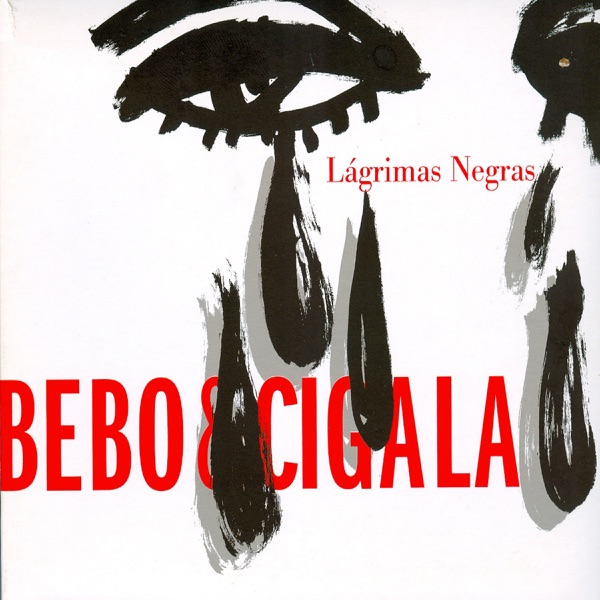
The result, Lágrimas negras, should not have worked. An album of Cuban boleros re‑interpreted with flamenco rhythm, recorded in just five days, with austere production that left all attention on the voices and the keys. And yet the impossible happened: it sold over a million copies worldwide, won a Latin Grammy, and convinced even the most skeptical that flamenco could embrace other music without betraying itself. "It’s not fusion," Cigala said in an interview. "It’s hunger. Hunger to tell stories that don’t fit into a single palo."
The album’s success was not accidental. Behind those recordings were years of work in tablaos, endless nights in peñas where Cigala learned to dose the drama of his voice. But above all, there was an intuition: that flamenco, at its core, had always been a music of back and forth. The back‑and‑forth songs, those that gypsies brought from America in the 19th century, were already proof of that. Lágrimas negras didn’t invent anything; it simply reminded the world that flamenco had been mixing with other music for centuries, even if some preferred to forget it.
From Lavapiés to world stages (without losing the accent)What followed was a career that few flamenco artists have achieved: filling the Royal Albert Hall in London, Carnegie Hall in New York, or the Teatro Colón in Buenos Aires without renouncing what made him unique. Cigala is not one of those singers who adapts their style to sound "international." On the contrary: the farther his music travels, the more gypsy it sounds. In Japan, where flamenco has legions of followers, his concerts fill with spectators who don’t understand a word of Spanish but recognize, in every note, the truth of a feeling.
His discography is a map of that constant search. From Picasso en mis ojos (2005), where he re‑interpreted Leonard Cohen and Tom Waits with flamenco guitar, to Indestructible (2016), a tribute to 70s Latin music with collaborations from Rubén Blades or Omara Portuondo, Cigala has shown that flamenco is not a genre, but a language. One that can translate the pain of an Argentine tango, the melancholy of a Cuban son, or the rebellion of an American blues.
That said, not everything has been applause. Flamenco purists — those who believe that cante jondo can only be sung in a tablao with a guitar and a wine jug — have twisted the gesture more than once. "What Cigala does is not flamenco," they say. He usually replies with a smile and a phrase that sums up his philosophy: "Flamenco is not for the flamencos. It’s for whoever feels it."
The voice that never goes outToday, with more than three decades on stage, Diego el Cigala remains an anomaly. He is not a mass artist like Alejandro Sanz, nor a pop icon like Rosalía, nor an untouchable classic like Camarón. He is something rarer: a bridge. A guy who has managed to make a Cuban grandfather and a young Japanese dance to the same beat, who has made flamenco sound in places where it had never sounded before, without explanations.
And most importantly: he keeps singing as if every song were the last. As if every night on stage were an opportunity to settle a debt with the duende. Because in the end, that’s what distinguishes the greats: not technique, nor awards, nor platinum discs, but the ability to make you believe, even for three minutes, that music can save you.
Or as he would say himself, with that mix of irony and street wisdom that characterizes him: "Flamenco isn’t sung, it’s lived. And if it doesn’t burn you, it isn’t good."