
💿 Discography
📖 Biography
The first time I heard Pokito a poco in a Lavapiés bar, with low lights and cigarette smoke mixing with the smell of coffee, I knew that music was not just an experiment. It was a revolution. Chambao did not invent electronic flamenco— that would be an exaggeration— but they did pull it out of Malaga’s underground circuit and turned it into a sound capable of filling venues in Mexico City or playing on a Spotify playlist while someone works at three in the morning. And all of that with a voice that seems to whisper secrets into the ear: María del Mar Rodríguez, La Mari, the woman who made the beat of a bulería sound like a lullaby.
They were born in 1999, amid the late Madrid Movida, when no one expected something new to emerge from the south. But Malaga, with its raw light and sticky nights, has always been a land of contrasts. There, amid the rumble of waves and the bass of Costa del Sol after‑parties, three friends—La Mari, Eduardo Casañ and Dani Carbonell—decided that flamenco did not have to stay in tablaos. They wanted to bring it to dance floors, yes, but also to those moments when music blends with silence. The result was an impossible mix: claps that sound like glitch, chants that float over ambient beats, lyrics that speak of love and heartbreak with the same intensity as a Triana fandango, but with the clean production of a Massive Attack record.
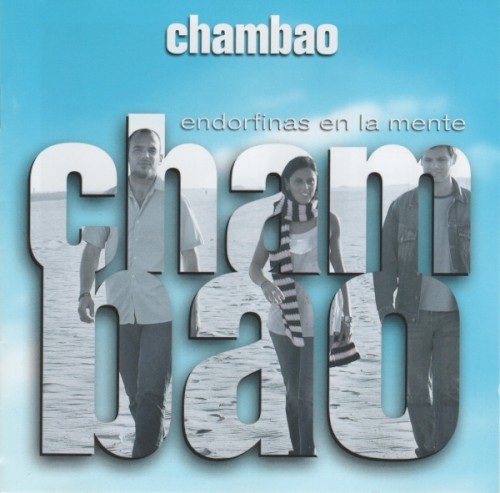
The album that changed everything: Endorfinas en la menteIf there is an album that defines Chambao, it is Endorfinas en la mente (2002). It was not their first work— that honor belongs to Flamenco Chill (2002), a self‑produced EP that went unnoticed by most— but it was the one that catapulted them. The album sounded as if it had been recorded on a beach at dawn: La Mari’s warm and cracked voice slipped between layers of synthesizers and electronic percussion without losing a shred of authenticity. Songs like Con tus mismas armas showed they could be profound without falling into cheap melodrama, while Pokito a poco—with that hypnotic hook—became the unofficial anthem of a generation that wanted to dance without sweating, feel without shouting.
The curious thing is that Endorfinas was not an immediate success. In 2002 Spain was still digesting the Latin pop boom and more commercial flamenco. But word of mouth did its magic. First came the design bars of Barcelona and Madrid, those venues with leather sofas and signature cocktails where music sounded like a whisper. Then alternative radio, “music to relax” playlists on early digital platforms, and finally Latin America. In Mexico, Argentina and Colombia, where flamenco had always had a loyal but minority audience, Chambao found an unexpected niche: those looking for something more than reggaetón or pop, but without giving up rhythm.
The Chambao formula: tradition and avant‑garde without asking permissionWhat made Chambao unique was not just the fusion of genres—something others had tried— but the naturalness with which they did it. They didn’t sound like a flamenco group trying to be modern, nor like electronics flirting with folklore. They sounded like themselves: three Malagueños who grew up listening to Camarón and Kraftwerk, Paco de Lucía and Brian Eno, and decided there was no need to choose.
La Mari’s voice was key. She is not a typical cantaora: her timbre is closer to a soul singer than to a traditional flamenca. But when she goes deep, when she drops those broken wails in Tiempo de soleá or Despierta, it’s impossible not to recognize the sprite. And that is what unsettled purists: Chambao did not betray flamenco, it expanded it. As critic Diego A. Manrique once said, "they are not electronic flamenco, they are flamenco with electrons."
Their influence on later Spanish music is undeniable, though sometimes overlooked. Groups like Ojos de Brujo, Fuel Fandango or even Rosalía— in her early stages— drew from that idea of fusing the ancestral with the contemporary. But Chambao did it first, with an elegance few have matched. They didn’t need autotune or million‑dollar choreography: they were content with a voice, a guitar and a computer.
What remains of Chambao today?The group remains active, though with less media noise than in their golden years. La Mari continues at the helm, exploring new sounds—like in Nuevo ciclo (2013), where they incorporated jazz and African music— without losing the essence that made them great. But their legacy goes beyond the records. Chambao proved that flamenco could be modern without losing its soul, that electronics were not enemies of tradition, and that a song could sound just as good in an after‑party as at a wedding.
Today, when "urban flamenco" floods the charts, it’s easy to forget that there was a time when someone had to pave the way. Chambao did it without fanfare, without grandiose statements. They simply made the music play and let the world decide whether to dance or stay still. And in the end, the world danced.
That said: if you ever get the chance to hear them live, do it. It’s not the same to listen to Pokito a poco on Spotify as to feel La Mari’s voice slip through the crowd like a whisper. Because Chambao, after all, is not just a group. It’s an atmosphere.