
💿 Discography
📖 Biography
Brussels, 2013. A man stumbles down the sidewalk of the Place de la Bourse, microphone in hand, singing through tears about a crumbling love. The scene, recorded with a mobile phone, goes viral in hours. He's not just any drunk: he's Stromae, and that song —Formidable— will become the unofficial anthem of broken hearts across half of Europe. What no one knew then was that this video, shot at 7 am with police trying to take him away, would be just the prologue to a phenomenon that would redefine French pop.
Paul Van Haver (Brussels, 1985) didn't choose his artistic name by chance. "Stromae" is "maestro" in verlan, the French slang that inverts syllables like a Rubik's Cube. And a master he is, although his genius isn't in technical virtuosity, but in something more subtle: turning pain into something danceable. His music —a cocktail of minimalist electro, robotic cumbia, afrobeat, and French chanson— sounds like what would happen if Kraftwerk and Manu Chao had a child in a Brussels lab, but with lyrics that hurt more than a Gardel tango. He talks about absent parents (Papaoutai), loneliness in the era of social networks (Carmen), and depression disguised as a party (Alors on danse). And he does it without resorting to cheap drama: his melodies are so catchy that you'll be humming the chorus before you realize you're singing about a suicide (Quand c'est?).
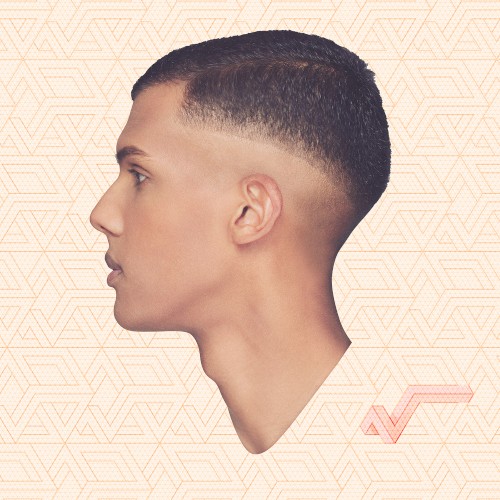
The album that changed everything: Racine CarréeIf there's a before and after in 21st-century Francophone music, that moment arrived on August 16, 2013. Racine Carrée —a title that plays with "square root" and "roots squared"— wasn't just an album: it was an earthquake. It sold three million copies, dominated the French charts for months, and slipped into countries where French usually sounds like a Godard film soundtrack. The secret? Stromae achieved what few do: intelligent pop without sounding pretentious. Songs like Tous les mêmes, with its funk bass that seems taken from a Kinshasa club, or Ta fête, which mixes African percussion with 80s synthesizers, proved that you could talk about uncomfortable topics without losing the rhythm.
But the real showstopper was Papaoutai. The song, inspired by the absence of his father —killed in the 1994 Rwandan genocide— became a generational anthem. The video, with a child dancing in front of a mannequin father, is one of those images that gets stuck in collective memory. It's no coincidence that, years later, the song is still being covered by artists from around the world or appearing in films and series. Stromae didn't compose a ballad about loss: he created a ritual. And rituals, when they work, transcend languages.
The success of Racine Carrée wasn't just commercial. The album proved that French could be global without betraying itself. In an era where English dominates the charts, Stromae showed that there was space for other sounds. And he did it without concessions: his lyrics are complex, his rhythms are hybrid, and his aesthetic is unmistakable. It's not pop for everyone, but when it connects, it does so with a rare intensity. As a French critic said: "Stromae doesn't sell songs, he sells mirrors".
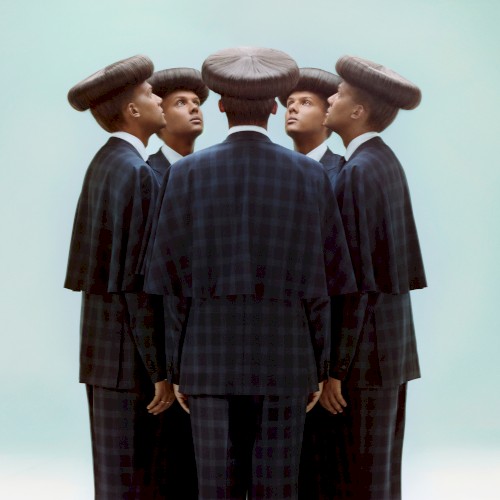
Silence and return: MultitudeAfter the Racine Carrée tour, Stromae disappeared. No dramatic announcements, no press releases, no retirement rumors. He simply stopped existing in the public sphere. Fans speculated: a new project? Personal problems? The answer came years later: anxiety, depression, addiction to medication. In his own words, "I got lost in success".
The return, in March 2022 with Multitude, was one of those moments the media calls a "musical event" without exaggerating. The album, darker and more experimental than the previous one, confirmed something that was already intuited: Stromae is not an artist who repeats formulas. Here, African rhythms are more prominent (he collaborated with musicians from Burkina Faso and Senegal), the lyrics explore themes like migration (L'Enfer) and identity (Santé), and there's even a nod to classical music in Mon amour, with a cello solo that seems taken from a Bergman drama.
Is Multitude better than Racine Carrée? It depends on who you ask. What's clear is that it's not an album for nostalgics. Stromae doesn't repeat the success of 2013 because he's not interested. His music evolves, becomes more complex, more personal. And that, in a world where many artists recycle themselves to exhaustion, has merit.
Legacy: more than an artist, a cultural phenomenonStromae is not just the most important Belgian artist of the 21st century in French. He's proof that pop can be profound without being boring, global without being generic, and personal without being self-indulgent. His influence can be seen in artists like Lous and The Yakuza, who mix electronic music with African sounds, or in Aya Nakamura, who has brought verlan into the mainstream. Even in Spain, where French usually sounds exotic, songs like Alors on danse became disco anthems without anyone really knowing what they were about.
But his greatest achievement isn't the awards (although he has a few), nor the sales (although they're in the millions), nor even the fact that his music plays at weddings and funerals alike. It's something harder to measure: Stromae made pain sound good. And in a world where sadness is often sold as something ugly or shameful, that's almost a revolutionary act.
Today, at 38 years old and with two albums that are already classics, Stromae remains an enigma. Will he disappear again? Will a third album come out? The only sure thing is that, when he does, it won't be to repeat himself. Because if Stromae has proven one thing, it's that in music, as in life, roots are not a starting point, but a place to return to in order to keep growing.
— And you? What's your favorite Stromae song? Mine is Quand c'est?. Not because of the lyrics (which are brutal), but because the first time I heard it, I was on the metro and had to get off at the next stop. I couldn't keep listening.