💿 Discography
📖 Biography
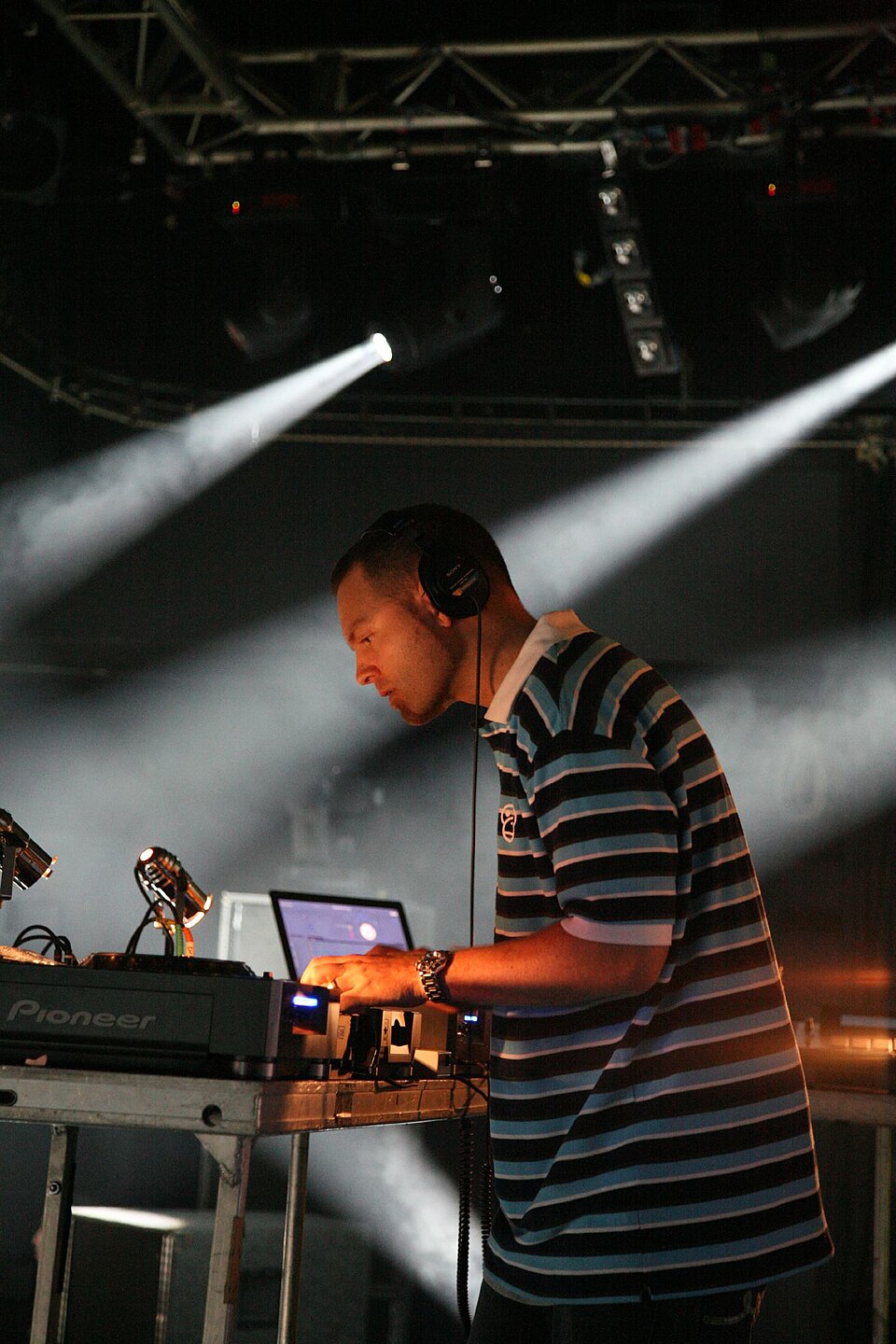
The basement of a house in Davis, California, wasn't the most glamorous place to change music. But there, at 16, with a pair of stolen Technics turntables from the university radio station where his brother worked, Josh Davis started doing something no one had attempted before: building entire songs from pieces of others. They weren't your average remixes or extended versions for dance floors. They were meticulous sound collages that sounded as if Miles Davis had recorded an album with the Beastie Boys in a NASA lab. This was the birth of DJ Shadow, the guy who proved hip-hop could be conceptual art without losing any groove.
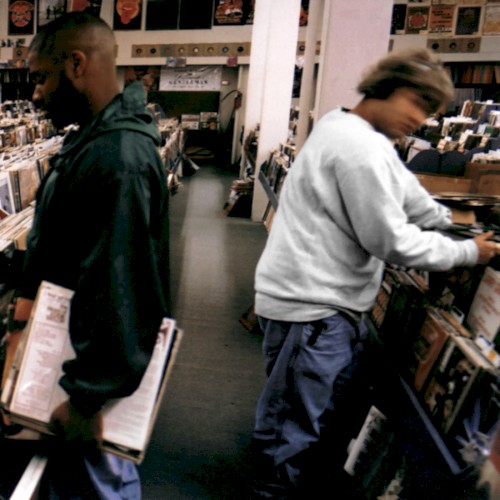
Davis didn't come to sampling as a prodigy, but as an obsessive. He spent nights scouring second-hand record stores, where employees knew him for buying entire boxes of forgotten vinyl: 70's Italian movie soundtracks, Baptist sermon recordings, obscure funk records no one else wanted. "I wasn't looking for hits," he confessed years later. "I was looking for textures. Something that, when cut and pasted, sounded like it had always been there." This sound archaeologist mentality — closer to a Walter Benjamin of the grooves than a club DJ — is what turned his debut, Endtroducing (1996), into an album that still sounds like the future 28 years later.
The album that invented a genre (unintentionally)If you listen to Endtroducing from start to finish today, the first thing you notice is that it doesn't sound like anything that existed before. There are no raps, no catchy choruses, not even a recognizable beat in the traditional sense. Instead, there are layers of samples overlaid with surgical precision: a distorted jazz piano, a fragment of drumming stolen from a progressive rock record, whispered voices that appear and disappear like ghosts. "Midnight in a Perfect World", the song that opens the album, is a perfect example: it starts with a sample of a Giorgio Moroder theme, but Davis manipulates it until it sounds like it's playing underwater, while a drumbeat stolen from a Lyn Collins record hits with the force of a pneumatic hammer.
Critic Simon Reynolds defined it as "the first hip-hop album that sounded like a David Lynch movie." And he wasn't exaggerating. Endtroducing not only redefined what instrumental hip-hop could be, but it created an entire subgenre: "intellectual trip-hop", a label Davis always hated ("Sounds like something a marketing executive would come up with while sipping a gin and tonic," he said in an interview). The truth is that the album sold half a million copies without a single commercial single, something unthinkable in the pre-Streaming era. And it did so without yielding one millimeter to industry expectations.
How did he do it? In part, because Davis didn't think like a musician, but like a curator. Each sample on Endtroducing is chosen with the same obsession with which a collector chooses a first edition of Ulysses. There's a fragment of a Metallica record ("Orion") that appears in "The Number Song", but it's so buried under layers of effects that only the most die-hard fans recognize it. There's a sample of a Tangerine Dream theme in "Stem/Long Stem", but it sounds like it was recorded at the bottom of a well. And then there's "What Does Your Soul Look Like (Part 1)"