
💿 Discography
📖 Biography
On March 23, 2017, a man with tattoos of ancient maps and a beard that seemed to be from a 19th-century engraving took the stage at the Latin Grammys with a speech that lasted exactly 47 seconds. He didn't sing. He didn't dance. He just said: "I don't care if they give me the award or not. This is for Puerto Rico." René Pérez Joglar —Residente to the world— had just punched the music establishment in the face, and he did it with the same naturalness with which other artists thank their managers. That day, Latin hip-hop stopped being a genre to become a scream.
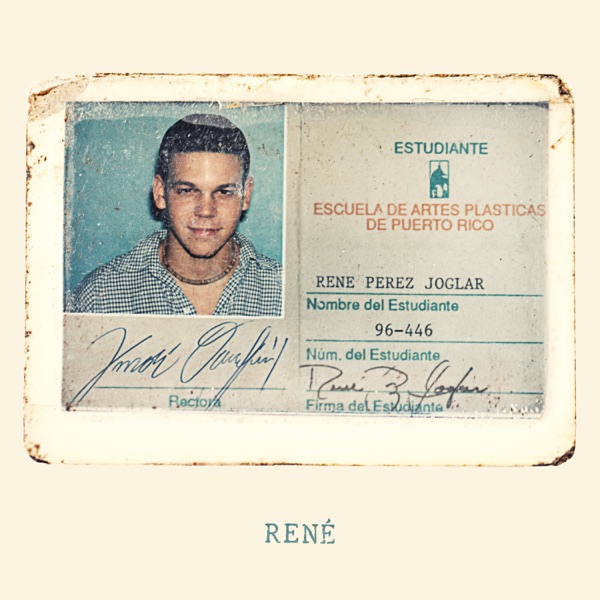
Born in San Juan in 1978, Residente didn't achieve success by chance. He built it with hard work. Along with his stepbrother Eduardo Cabra (Visitante), he formed Calle 13 in 2005, a band that did something nobody expected: take reggaetón —a rhythm associated with parties, dancing, and simple lyrics— and fill it with street poetry, social criticism, and humor so acidic that it hurt. Songs like Atrévete-te-te or La cumbia de los aburridos weren't just hits; they were disguised manifestos with catchy rhythms. And the audience, which at first flipped out with Residente's flow, eventually understood that behind each verse was an uncomfortable question: why couldn't reggaetón be intelligent?
But if something defines Calle 13, it's their ability to turn anger into art. Latinoamérica (2011) is not just a song; it's a hymn. With verses like "You can't buy the wind / You can't buy the sun," Residente and Visitante reminded an entire continent that their identity had no price. The song, recorded with artists like Totó la Momposina and Susana Baca, sounded like resistance, memory, something that refuses to die. And it worked: the theme became a cultural phenomenon, covered by school choirs, used in protests, and even studied in universities. It's not an exaggeration to say that Latinoamérica is the most important song of the 21st century in Spanish. Period.
With 28 Latin Grammys under their belt, Calle 13 is not only the most awarded artist in the history of these awards; it's proof that commercial success and artistic integrity are not incompatible. But Residente never settled for that. In 2017, he released his first solo album, simply titled Residente, and that's when things got really interesting. The guy spent two years traveling the world —from Siberia to the Amazon— recording music with local instruments and collaborating with artists that nobody in the mainstream knew. The result was an album that sounded like everything and nothing at the same time: sometimes it was hip-hop, other times it sounded like traditional Chechen music, and at some point, it seemed like an audio documentary.
The most brutal thing about Residente is not its sound experimentation, but its honesty. In Guerra, for example, the guy raps about violence in Syria with a crudeness that leaves you breathless. In Apocalíptico, he mixes sounds from the Amazon jungle with electronic beats to talk about climate change. And in Desencuentro, a collaboration with French singer SoKo, he turns a love breakup into a metaphor about human disconnection. There are no filters. There are no concessions. It's music made from the gut, and that's noticeable.
But Residente is not just a musician. He's an agitator. A guy who uses his platform to say what others silence. When Hurricane Maria devastated Puerto Rico in 2017, he didn't stay in Miami making empty statements. He planted himself on the island, recorded a documentary (René), and used his voice to denounce the US government's abandonment. When he received the Musical Excellence award at the 2021 Latin Grammys, he didn't talk about his career. He talked about the climate crisis and how art should serve something more than entertainment. "Music is not just for dancing," he said. "It's also for awakening".
That's Residente in essence: a guy who refuses to be domesticated. While other artists worry about maintaining their polished image, he prefers to get his hands dirty. While others seek easy success, he chooses the difficult path. And while others settle for being famous, he wants to be necessary. He's not the typical rapper who brags about money or women. He's the guy who makes you think, who takes you out of your comfort zone, who reminds you that art can be a weapon.
Is he the best rapper in Latin America? Probably. Is he the most important? Without a doubt. But the most interesting thing about Residente is not his talent —which is immense—, but his ability to make you uncomfortable. Because in the end, that's what a true artist does: he doesn't leave you indifferent. He forces you to take a stand. And in a world where music is sounding more and more the same, Residente remains a scream in the silence.