
💿 Discography
📖 Biography
Montevideo, 1984. Three guys gather in a garage with more desire to laugh at everything than to play well. Roberto Musso, Santiago Tavella and Álvaro Pintos didn’t know it, but they had just invented something Spanish‑language rock had never seen: a machine to dismantle speeches, to sing what no one dared say aloud, and on top of that with guitars that sounded like a party even when they were talking about misery. Forty years later, El Cuarteto de Nos remains the only band that can make you laugh, think and get a buzz in the same chorus.
It’s not an exaggeration. While other 80s bands dissolved or became pale versions of themselves, these Uruguayans achieved something almost impossible: to age without becoming respectable. They keep writing lyrics that feel like bar jokes but hide knives, as if Bukowski and Les Luthiers had a bastard child in a mechanic shop. And the best part: it works. Songs like "Yendo a la casa de Damián" or "El hijo de Hernández" are generational anthems not because they sound epic, but because they sound like truth —uncomfortable, dirty, necessary—.
From punk to bipolar: a discography that doesn’t ask for permissionTheir first album, Alberto Wolf y el Cuarteto de Nos (1984), was pure noise and adolescent humor. But even then the germ of what was to come was there: lyrics that mixed the trivial with the transcendent, as if an encyclopedia salesman and a street philosopher had written together. Over the years, that formula refined itself without losing its essence. El Cuarteto does not evolve: it becomes more precise.
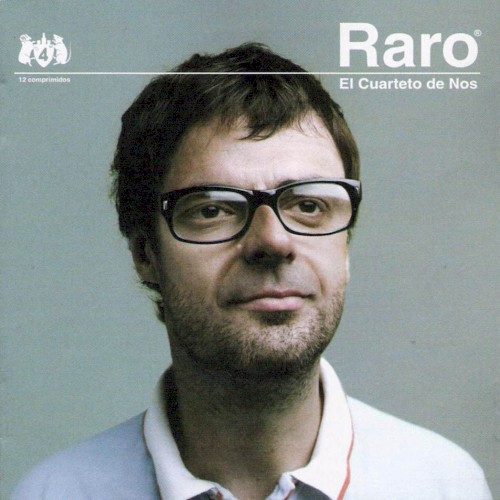
By Raro (2006) they were already something else. Songs like "Ya no sé qué hacer conmigo" or "Invisible" proved they could talk about depression, loneliness and failure with a clarity that few rock bands —or any genre— dare to have. Three years later, Bipolar took that honesty to another level: an album that swings between euphoria and abyss, as if someone had asked Lou Reed to compose about the 40s crisis in a small country. Then came Porfiado (2015), where maturity didn’t soften them, but sharpened them. Tracks like "Whisky en Uruguay" or "No llora" are small masterpieces of musical narrative, where every verse feels like it comes from a real conversation, not a songwriting workshop.
The curious thing is that, despite their prestige, they have never been a mass band. They don’t fill stadiums like Soda Stereo nor have the cult of Café Tacvba. But their influence is underground and persistent: from young bands like No Te Va Gustar to soloists like Jorge Drexler they have acknowledged their debt to that unique style of mixing the popular with the intellectual, the grotesque with the poetic. El Cuarteto does not make songs: they create cultural artifacts.
The secret: not being afraid of anythingThere is something deeply Uruguayan in their attitude. In a country where sharp humor and self‑criticism are almost a national sport, El Cuarteto brought that to rock with a naturalness that disarms. They are not a typical protest band, but they are not innocent either. When they sing "El país de la cola" (from Cortamambo, 2000), they are not describing Uruguay: they are dissecting mediocrity, resignation, the "no te metás" that paralyzes any society. And they do it without sermons, with irony and a catchy melody that makes you hum the diagnosis of your own misery.
Another key detail: they never take themselves too seriously. Even in their darkest albums, there’s a wink, an inside joke, a pop reference that lightens the weight. It’s as if they know the best way to talk about serious things is not to be solemn. That mix of depth and lightness is what makes them unique in Spanish‑language rock. They are not like the Mexican Molotov (more direct, more political) nor the Argentine Divididos (more epic, more lyrical). El Cuarteto is something else: rock with a Río de la Plata accent, but with a universal gaze.
Why do they still matter after 40 years?Because the world still needs bands that don’t keep quiet about anything. In an era where pop music has become an aseptic product and rock seems doomed to repeat its own clichés, El Cuarteto de Nos remains a reminder that art can be intelligent, fun and rebellious at the same time. They haven’t changed their formula because their formula is, at heart, having no formula.
And perhaps that is their greatest achievement: to show that authenticity is not a style, but an attitude. Forty years after that Montevideo garage, they still sound as if they had just invented rock. And the best part is that, if you listen closely, you realize that they did.
If you still don’t know them, start with Raro or Bipolar. If you’re already a fan, re‑listen to "El hijo de Hernández" and tell me if that mix of tenderness and cynicism still gives you chills. El Cuarteto de Nos is not a band: it’s a manual on how to live without losing humor —nor dignity— in a world that insists on messing with you.