💿 Discography
📖 Biography
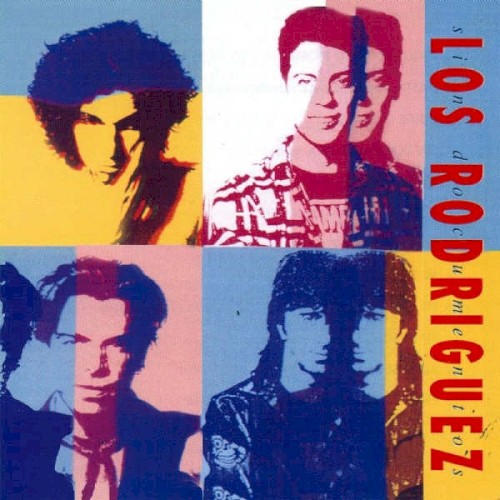
Madrid, summer of 1993. A rehearsal space in Lavapiés smells of tobacco, hot beer and guitar leather. Andrés Calamaro scratches the strings of his Fender, Ariel Rot adjusts the delay pedal and Germán Vilella hits the snare with a rhythm that seems taken from a flamenco tablao. Suddenly, what starts as a dragged blues turns into something different: Sin documentos is born in that instant, without scores, without pretensions. Just four guys who have just invented rock with a gypsy accent.
Los Rodríguez were not just another band. They were the perfect short circuit between the urban rock of Buenos Aires, the Catalan rumba of Peret and the blues of seedy bars. In only seven years —from 1990 to 1997— they recorded three albums that today sound as if they had been written yesterday. It isn’t nostalgia: it’s that their music dodged the passage of time like a matador dodges a bull. Palabras más, palabras menos (1994) is, for many, the best Spanish-language rock album of the 90s. And I’m not saying it: ask any guy over 40 who grew up with a guitar in his hands.
The cocktail nobody knew how to mixThe formula was simple in theory, but impossible in practice: take the swagger of the Rolling Stones, the melancholy of Tom Waits, the beat of rumba and the raw lyrics of a dawn bar. Ariel Rot —ex Tequila— brought the craft and the raspy voice; Calamaro, street poetry and the gift of turning a drunken joke into a memorable verse. Germán Vilella and Pablo García, the other two Spaniards in the group, were the rhythmic base that made everything sound as if it had been recorded in a garage with a bottle of wine and a couple of cheap mics.
But what really made them unique was their ability to sound authentic without falling into cheap folklore. When Calamaro sings "Soy un tipo que no tiene documentos / ni patria ni bandera ni religión", he isn’t doing politics: he’s describing the life of anyone who has felt uprooted. That mix of despair and party, of blues and bulerías, is what made them the soundtrack of a generation that learned to dance with their feet in the mud.
Three albums to understand Spanish rockTheir discography is short, but each album is a reality check:
- Sin documentos (1993): The debut that changed everything. Songs like Mucho mejor or La milonga del marinero y el capitán proved that Spanish rock could sound raw without losing elegance. The album sold more than 200,000 copies in Spain and catapulted them to the biggest stages. Critics, who initially looked at them with suspicion, eventually gave in: "This is not fusion, it’s survival," wrote a journalist in El País.
- Palabras más, palabras menos (1994): The album that cemented them. Here is Dulce condena, a song that sounds like heartbreak and too many drinks, and Mi enfermedad, the track that all bars in Spain and Latin America have covered at least once. The production is cleaner, but without losing its essence: it still sounds like it was recorded on a night of revelry. "It’s the Exile on Main St. of Spanish rock," once an Argentine critic said. Exaggerated, but not too much.
- Escenas de la vida cotidiana (1996): The last album, the darkest, the one that aged best. Songs like Para no olvidar or A los ojos carry a melancholy that foreshadows the band’s end. Calamaro was already starting to distance himself, Rot was more interested in other projects, and concerts became more chaotic. But even in that album there are gems like El último trago, a rumba that sounds like an early farewell.
When Los Rodríguez split in 1997, they left a void that no one has filled. It isn’t that there weren’t bands that tried to imitate their sound —there were, and many—, but none achieved that mix of shamelessness and depth. Spanish rock of the 2000s and 2010s drank from them, but without their authenticity. Calamaro continued a brilliant solo career, Rot became a reference in music production, and Vilella and García disappeared from the map. But together, in those three albums, they did something that very few bands manage: create a sound that feels both universal and deeply personal.
Today, if you play Sin documentos in a bar in Madrid, Buenos Aires or Mexico City, people still sing the chorus at the top of their lungs. It isn’t nostalgia: it’s that there are songs that transcend their era. Los Rodríguez were not a 90s band. They were—and are—the proof that Spanish rock could sound like more than an Anglo‑Saxon copy. It could sound like street, cheap wine, endless nights. And that, in the end, is all that matters.
Did they lack time? Of course. But as Calamaro said in an interview: "The best bands die young, like poets." And Los Rodríguez died at the very right moment.