💿 Discography
📖 Biography
On October 12, 1993, in a rehearsal space in Granada with walls covered in posters of Sonic Youth and Camarón, Jota adjusted the distortion pedal until the amp started spewing an unbearable hum. Florent Muñoz, with a guitar that seemed rescued from a flea market, strummed three dirty chords. Eric Jiménez hit the drums as if he wanted to break them, and Banin, with the bass hanging almost to the knees, closed his eyes. At that moment, unknowingly, they had just recorded the first demo of what would become Super 8. It wasn’t just an album. It was the birth certificate of indie in Spanish as we know it today.
Thirty years later, Los Planetas remain the only band that has achieved something almost impossible: sounding at once like Pavement, the early Smashing Pumpkins, and a deep‑voiced singing that slips between riffs like a ghost. It’s not fusion. It’s not a mix. It’s something dirtier, more uncomfortable, more real. As if someone had put Tom Verlaine and Enrique Morente in a room and told them, "Fix yourselves." And they did fix themselves.
The sound Granada stole from noiseNo one expected four kids from Granada, raised among the smoke of Albaicín bars and Pixies vinyl, to explode Spanish rock. But they did. And they did it with a naturalness that still shocks today. Super 8 (1994) sounded like nothing that had been made before in Spanish. It wasn’t 80s pop, nor 90s urban rock, nor even the Anglo‑Saxon indie copied note for note. It was something rawer, more personal, more yours. Songs like "De viaje" or "Brigitte" had that rare quality: they hit you with guitars that sounded like rusty cans and, at the same time, left you a splash of melancholy that wouldn’t wash away even with cold water on your face.
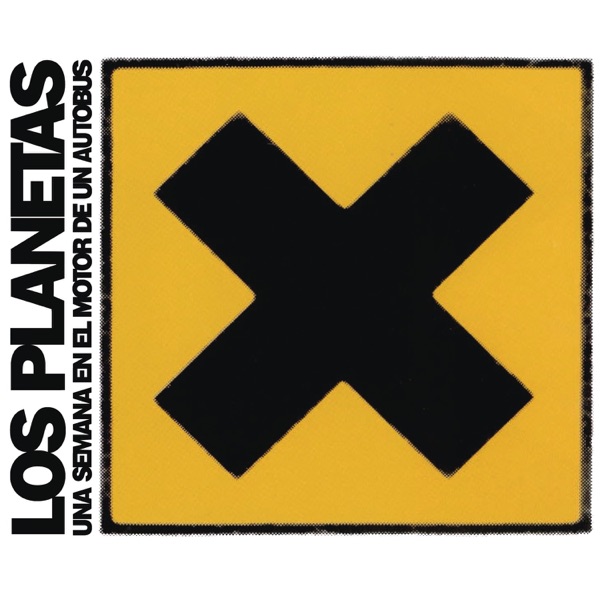
But if Super 8 was the launch, Una semana en el motor de un autobús (1998) confirmed that it wasn’t coincidence. Here the group took their sound to another level: more ambitious, darker, more Granada. The album title— inspired by a B‑movie—already hinted at where they were headed: aimless journeys, endless nights, that feeling of being trapped in a loop of self‑destruction and beauty. Songs like "Un buen día" or "Corrientes circulares en el tiempo" are small masterpieces of three minutes where shoegaze, noise, and flamenco hand in hand without asking permission. And then there’s "Qué puedo hacer", a track that starts with a riff that seems ripped from a Detroit garage and ends with lyrics that sound like a confession written on a bar napkin: "No sé qué puedo hacer / para que no me duela tanto verte así". Brutal.
The legend of those who never sold outIn a world where many bands end up caricatures of themselves—endless tours, acoustic versions of their hits, collaborations with influencers—Los Planetas have done the exact opposite: disappear when they want, reappear with albums nobody expected, and, above all, never apologize for anything. Their refusal to sell their catalog to record labels or platforms has been almost an act of resistance. While other bands of their generation faded into oblivion or became circus acts, they kept their own path, at their own pace, without explanations.
That said, when they decide to release something, the impact is immediate. La leyenda del espacio (2007) was one of those knocks on the table. After years of silence, the group returned with an album that sounded like Andalusian electronics, desert raves, something that didn’t fit any box. Tracks like "Y además es imposible" or "Si estás pensando mal de mí" mixed programmed beats with lyrics that still sounded like Granada, summer nights, that special light only the city has. It wasn’t an easy album. It wasn’t a commercial one. But it was, one of the bravest of their career.
The legacy: why they’re still neededThere’s something in Los Planetas that goes beyond music. It’s that attitude of "we’re here, we like what we do, and if you don’t like it, screw yourself." In a scene like Spain’s, where success is usually measured in sales or minutes on Los 40 Principales, they’ve shown that you can be relevant without being mainstream. That you can fill venues without appearing on TV. That you can have a career of more than thirty years without repeating or betraying yourself.
Their influence is huge, though not always visible. Bands like Vetusta Morla, Lori Meyers, or even younger groups like Carolina Durante have acknowledged more than once that without Los Planetas they wouldn’t exist. But their true legacy isn’t in the albums they inspired, but in that idea that Spanish rock doesn’t have to sound like anything but itself. That it can be dirty, poetic, contradictory, and, above all, free.
A few years ago, at a festival in Barcelona, Jota took the stage with a Ramones T‑shirt and a guitar that seemed about to fall apart. There was no introduction, no thanks, not even a "good night." Just four chords and that voice that seems to drag centuries of Granada history. After the first song, someone in the crowd shouted: "¡Sois los mejores!" Jota didn’t even flinch. He kept playing. As if he knew something that others still don’t understand: that Los Planetas are not a band. They’re a state of mind.