💿 Discography
📖 Biography
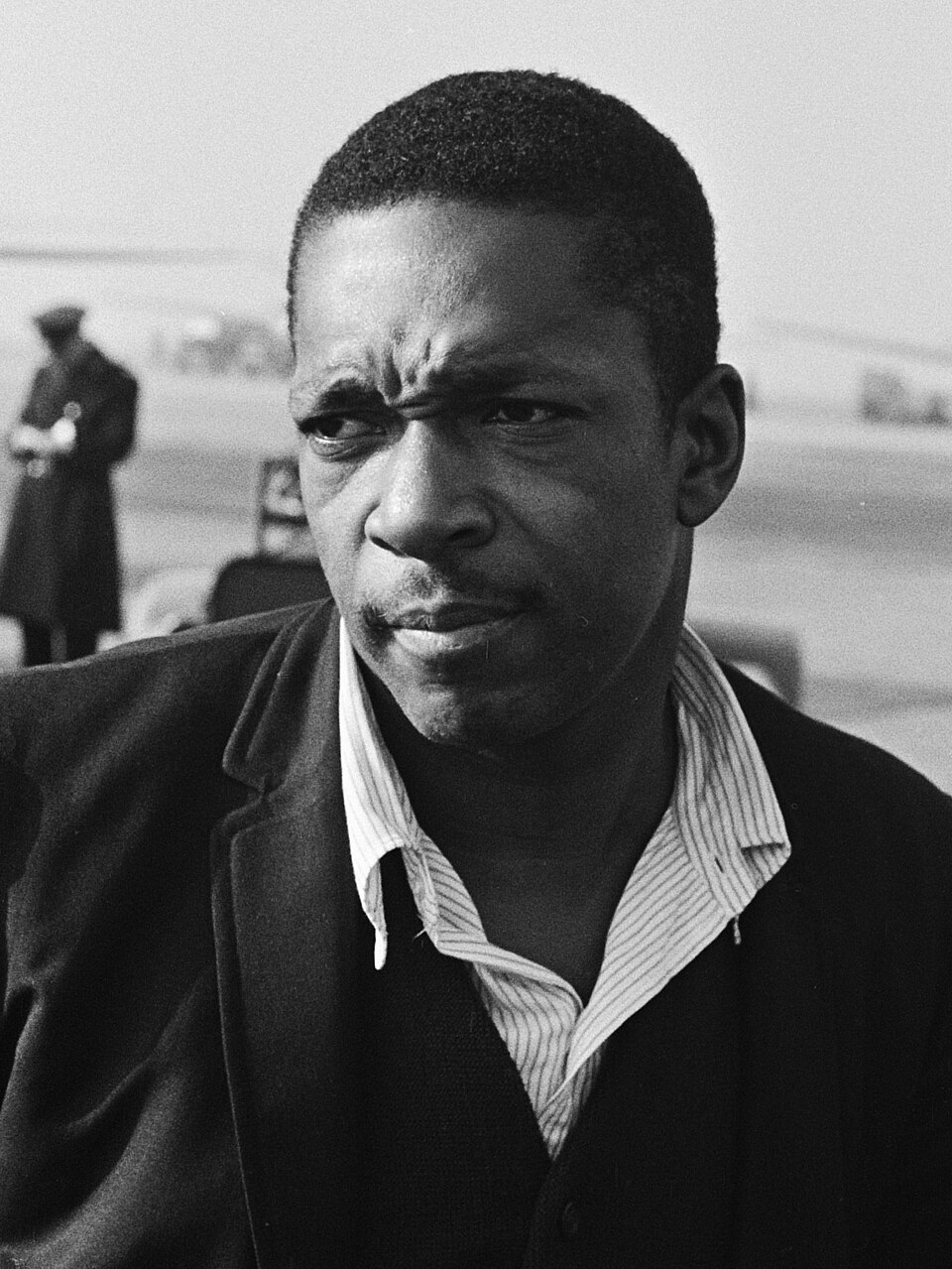
One night in 1965, the smoke of a Harlem club mingles with the chords of “A Love Supreme” and, suddenly, the audience freezes; John Coltrane’s saxophone slices the air as if it were fire. That moment captures the musician’s power, who, at 39, was already redefining jazz.
Born in 1926 in Hamlet, North Carolina, Coltrane discovered the saxophone during his teens and, before turning twenty, already displayed a technique that left his peers awestruck. After serving in the United States Navy, he settled in Philadelphia, a fertile ground for the bebop scene. There he began to forge a reputation as a sideman, working with figures such as Miles Davis and Thelonious Monk, and learning to play under the pressure of the best.
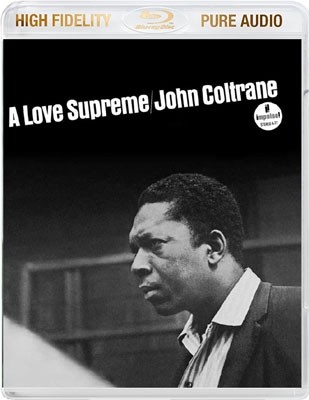
The records that are today cited as milestones are, to a large extent, the product of that intensive learning phase. “Giant Steps” (1960) marks a harmonic revolution; its intricate progressions force improvisers to rethink how they play. In the same year, “My Favorite Things” turns a song from “The Sound of Music” into a modal meditation, demonstrating that the saxophone can be as versatile as a string quartet. Three years later, “A Love Supreme” arrives as a spiritual testament, a four‑part suite that transcends a mere concert to become a musical prayer.
Coltrane’s style blends the energy of bebop, the depth of hard bop, and the freedom of free jazz, without forgetting the clarity of modal music. Pieces such as “Impressions” and “Equinox” reveal his ability to stretch solos that seem to converse with the listener, creating soundscapes that go beyond mere technical execution. In my opinion, that skill of mixing rigor and emotion is what sets him apart from his contemporaries.
Critics have constantly noted his drive to break conventions; it was not just about playing notes, but about exploring new forms of expression. Each recording is a laboratory where improvisation becomes science, and the result, a catalog that continues to inspire generations. To this day, musicians worldwide cite Coltrane as a mandatory reference, and his music still resonates in jazz clubs and international auditoriums.
John Coltrane’s legacy is not limited to the records he released in his lifetime. Posthumous Grammy awards confirm the relevance of his work, and “A Love Supreme” frequently appears on lists of the greatest jazz albums of all time. His influence extends beyond the genre: rock, hip‑hop, and electronic music artists have borrowed fragments of his improvisations, demonstrating that his impact is truly universal.
Today, Coltrane’s music remains a subject of study in conservatories and is heard in playlists ranging from the classical to the experimental. Whenever a young saxophonist tries to emulate his “soul” in a solo, the conversation begun over half a century ago is revived. That continuity, more than a tribute, is proof that his musical vision remains alive and, incidentally, continues to challenge anyone who dares to listen.