💿 Discography
📖 Biography
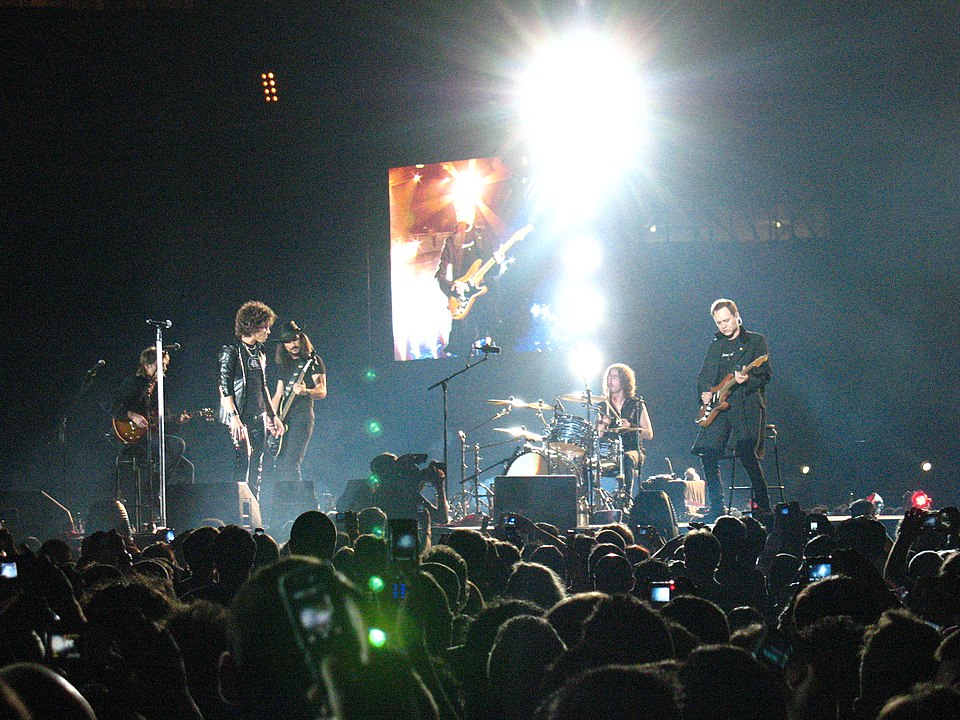
On October 12, 1993, the Palacio de los Deportes in Madrid turned into a controlled madhouse. Twenty thousand people shouted verses about wine, betrayal and ghosts, while Enrique Bunbury, in a black trench coat and eyes fixed on the infinite, disassembled "La herida" as if each note were a knife. It was not a concert. It was a collective exorcism. And that night, as in so many others, Héroes del Silencio proved that Spanish rock could be as big, dark and necessary as the best of its Anglo‑Saxon references.
Zaragoza, 1984. Four guys with more attitude than resources—Bunbury, Juan Valdivia, Joaquín Cardiel and Pedro Andreu—gathered in a rehearsal space with a fixed idea: to make music that sounded like a horror film, a gothic novel, something that didn’t fit the radio formula of the Movida. They didn’t want to be another pop band with guitars. They wanted to be diferentes. And they succeeded. Their first EP, Héroe de leyenda (1987), sounded like The Cure mixed with the dirty blues of The Rolling Stones, but with lyrics that smelled of wet earth and dry blood. It was as if Edgar Allan Poe had been born in Aragón and decided to play guitar.
The trilogy that changed everythingIf there is an album that defines the DNA of Héroes, it is Senderos de traición (1990). Recorded in London with producer Gustavo Santaolalla, the album is a masterpiece of tension and melody. Songs like "Mar adentro" or "Entre dos tierras" are anthems that transcend time: the first, an epic ballad with a guitar solo that seems to cry; the second, a hard‑rock track with a riff that breaks your chest. But the most important thing is how they sound together. There is no filler. Each song is a chapter of the same lucid nightmare.
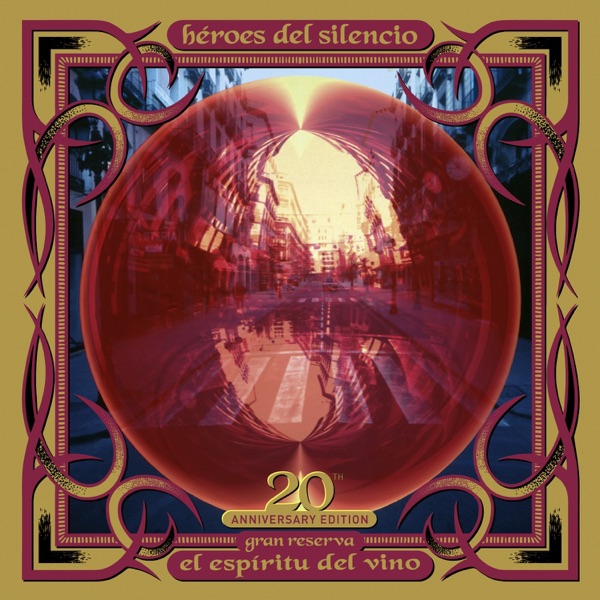
Before that, El mar no cesa (1988) had been their calling card. A raw debut, with tracks like "Flor de loto"—where Bunbury sings *"soy un héroe de leyenda, pero no tengo medalla"*—that already made clear where they were headed. But it was El espíritu del vino (1993) that took them to Olympus. Produced by Phil Manzanera (Roxy Music), the record is an orgy of distorted guitars, atmospheric keyboards and lyrics that drink from mythology, alcohol and self‑destruction. "Nuestros nombres" is pure dynamite: a seven‑minute track that starts as a ballad and ends as a riot.
Then came Avalancha (1995). The album that crowned them as the biggest Spanish rock band. Recorded in Los Angeles with Bob Ezrin (producer of Pink Floyd, Alice Cooper), the album is a beast of sound: harder, darker, more cinematic. Songs like "Avalancha" or "Despertar" sound like the soundtrack of a personal apocalypse. But there is also space for delicacy, as in "Iberia sumergida", where Bunbury sings *"el tiempo se detiene en tus pupilas"* with a voice that seems to break apart. That album sold over a million copies in its first year and led them to fill stadiums in Mexico, Argentina and Spain. They were not a fad. They were a religion.
The chemistry no one could replicateWhat made Héroes del Silencio unique? It wasn’t just Bunbury’s voice— that mix of Jim Morrison and a 19th‑century theater actor—nor Juan Valdivia’s guitars, capable of sounding both melodic and brutal. It was the sum of everything. Cardiel and Andreu in the rhythm section were a precision machine, but with swing. And the lyrics… God, the lyrics. Bunbury wrote as if each song were the last page of a diary found in a drawer. He spoke of love, death, betrayal, ghosts, but always with a poetic language that avoided cliché. They were not songs. They were fragments of a novel that was never written.
Of course, not everything was a bed of roses. Pressure, overwhelming success and internal tensions led them to split in 1996, just when they seemed unstoppable. Bunbury launched a solo career that cemented him as one of the most important artists in Hispanic rock, but Héroes remained frozen in time, like a myth that never wore out. Until 2007, against all odds, they announced their return. And the world went crazy.
Ten concerts. Only ten. But enough to prove that the magic was still intact. On October 12, 2007, at the Estadio Olímpico in Seville, more than 60,000 people sang "Maldito duende" at full volume, as if time had not passed. They were not just 90s fans. There were twenty‑year‑olds who discovered the band through YouTube, a father, a friend. Héroes del Silencio didn’t need to return to prove anything. But they did. And they reminded us why, decades later, we still talk about them.
The legacy that never fadesToday, more than 30 years after their first album, Héroes del Silencio remain a reference. Their influence is felt in bands like Vetusta Morla, soloists like Love of Lesbian, even in artists from other genres who admire their ability to mix the epic with the intimate. But the most important thing is that their music still sounds fresh. Play "La herida" or "Entre dos tierras" at a party and you’ll see people fall silent to listen. It’s not nostalgia. Those songs have something that transcends fashions.
In a world where rock seems to have lost its breath, Héroes del Silencio are proof that the genre can be big, ambitious and, above all, necessary. They didn’t make music to pass the time. They made music to save the soul. And they did it.
Bunbury said it better than anyone in "Despertar": *"No hay héroes, solo sombras que se alargan"*. But sometimes, shadows are more powerful than light.