💿 Discography
📖 Biography
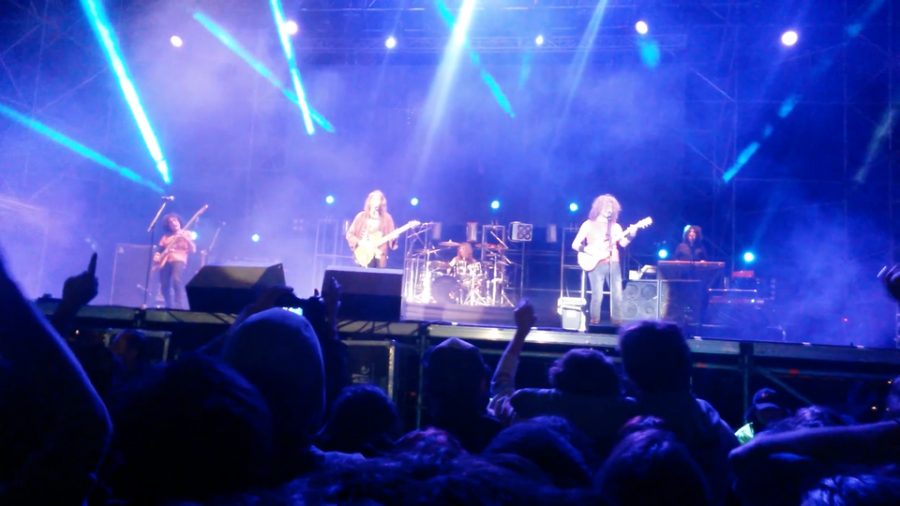
Plasencia, 1987. Two guys with guitars and a fixed idea: make music that hurts, that grates, that does not ask permission. Roberto Iniesta —Robe for those who know him— and Ra Moreno did not want to form a band. They wanted to declare war. And they did it. Extremoduro was not born to fit into radios, to smile on covers, or to sign autographs. It was born to spit truths at full force, to mix amplifier noise with the wail of a deep song, to turn rock into an act of survival.
Thirty‑five years later, the diagnosis is clear: no one has hurt Spanish rock with such elegance. No one has sung about love, hate, heroin or loneliness with that blend of rawness and lyricism. And no one, absolutely no one, has managed to make an album like Agila (1996) sound both like a barricade shout and like a shattered Lorca poem against a Marshall amplifier.
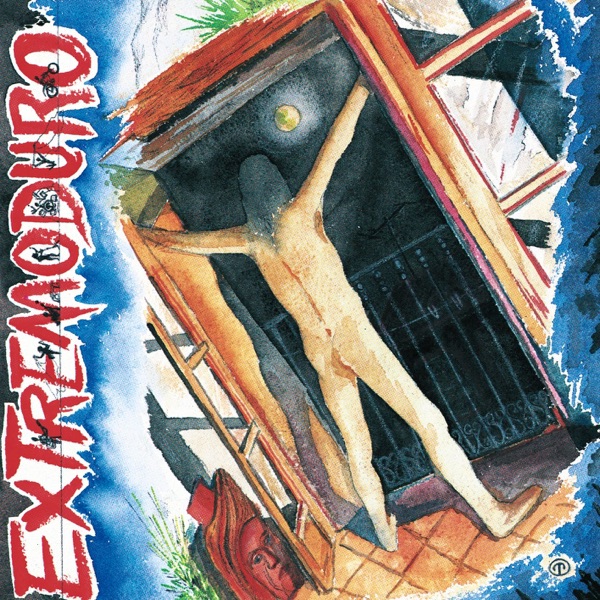
But beware, because Extremoduro is not just noise. It is pure mathematics. Robe Iniesta —who writes, composes, produces and even designs the covers— has the rare ability to turn chaos into structure. Listen to "So payaso" and tell me if it isn’t a surgical precision exercise disguised as epic drunkenness. Or "Salir", where flamenco, hard rock and psychedelia intertwine in a hug that seems about to break at any moment… Until the song grabs you by the neck and doesn’t let go. That is Extremoduro: music that shakes you, but with method.
The albums that broke the moldIf Spanish rock had a museum, three Extremoduro albums would occupy the central hall. Not by chance, but because each of them marked a before and after.
- Rock transgresivo (1989): The first punch. Recorded with four hard drives and a lot of bad milk, this album proves that you don’t need a luxury studio to make history. Songs like "Extremaydura" or "Decidí" are pure instinct, with riffs that sound as if they were recorded in a garage with walls full of blood. Here everything is already there: rage, dirty poetry, genre mix. Robe called it "rock transgresivo" because he didn’t know how to name something that didn’t fit anywhere. And it still doesn’t fit.
- Agila (1996): The album that changed everything. If Rock transgresivo was the shout, Agila was the masterpiece. Here Extremoduro stopped being a cult band to become a phenomenon. "So payaso", "Salir", "Buscando una luna" or "La vereda de la puerta de atrás" sound like legend. And it’s not an exaggeration: Agila is, for many, the best Spanish rock album in history. Not because of awards (which it has none), nor sales (which are not massive), but because each listen is like opening a wound that doesn’t hurt, but you know it’s there.
- Para los restos (2002): The confirmation. If Agila was the explosion, Para los restos was the consolidation. A more polished album, but equally wild. Songs like "A fuego" or "La vieja" show that Robe not only didn’t soften, but sharpened his aim. Here flamenco and rock fuse in a way no one has matched. And the lyrics… Well, the lyrics remain those that make you feel Robe is speaking directly into your ear, as if he knows exactly what you carry inside.
There are more albums, of course. Deltoya (1992), Pedrá (1995), La ley innata (2008)… All good, some even brilliant. But those three —Rock transgresivo, Agila, Para los restos— define the band’s DNA. The ones that show Extremoduro is not just a rock band, but a state of mind.
Robe Iniesta: the last Mohican of rockIf Extremoduro is a bomb, Robe Iniesta is the fuse. And what a fuse. He is not just the band’s leader, he is its brain, its heart and, sometimes, its liver. A guy who has turned rock into a way of life, an act of resistance against everything that smells like establishment. He has not yielded a millimeter, not when record companies asked for more commercial songs, not when critics called him "too raw", not when the public demanded more of the same.
Robe is not a musician. He is a poet with a guitar, a marginal philosopher, a guy who writes lyrics as if each word costs him blood. And perhaps that is what makes Extremoduro sound so authentic: because there is no calculation, no concessions, no posing. Only truth. Sometimes uncomfortable, sometimes brutal, but always truth.
And that, in a world where rock has become another product, is revolutionary. Robe has not changed. He remains the same guy who in 1987 decided he would not apologize for making the music he wanted. And that, in 2024, is rarer than a unicorn.
Why Extremoduro still mattersBecause rock needs guys like Robe. Because at a time when everything sounds the same, when songs are made in labs and artists are sold as brands, Extremoduro remains a shout in the silence. A reminder that music can be wild, dirty, imperfect… and at the same time perfect in its imperfection.
It is not a band for everyone. If you seek sweet melodies or politically correct lyrics, Extremoduro is not your place. But if what you want is music that turns your guts, makes you feel alive, reminds you that rock is not just a genre but an attitude… then welcome to the club.
Because in the end, Extremoduro is not just a band. It is a way to understand music. And life.
And that, buddy, has no price.