💿 Discography
📖 Biography
The stage is dark, only illuminated by a beam of blue light that outlines the silhouette of a guy with sunglasses at three in the morning. There's no choreographed dance, no pyrotechnics, no dancers. Just him, a microphone, and that voice that seems to come from an old phone but, ironically, sounds clearer than anyone else's in the genre. That's how a Feid concert starts, and that's how the mystery begins: how does an artist who writes songs for others end up being the one who best understands what a generation wants to hear?
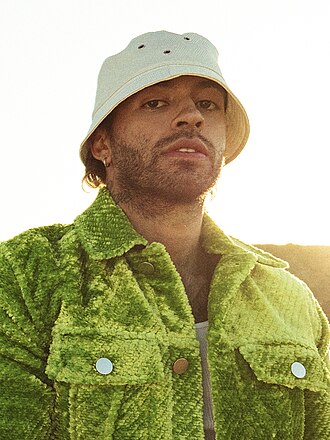
Salomón Villada Hoyos —Feid to the world— was born in Medellín in 1992, but his music doesn't smell like neighborhood or cliché. Or at least not just that. There's something more in that reggaeton that distills: a mix of digital nostalgia, R&B that sneaks between the beats, afrobeats that give it a global air without losing the local flavor. It's not the reggaeton of sharp blows and explicit lyrics, but the one with melodies that stick to you like gum on your shoe. The one that sounds in the after-parties when everyone's left the dance floor, but you're still there, with your eyes closed, letting the music take you away.
The composer who got tired of writing for othersBefore becoming Feid, Salomón was that guy who wrote songs for the big names. J Balvin, Maluma, Nicky Jam... Names that fill stadiums, but sometimes need someone to give them the missing lyrics. He did it. And he did it so well that, at some point, he must have wondered: "What if instead of giving them my ideas, I keep them for myself?"
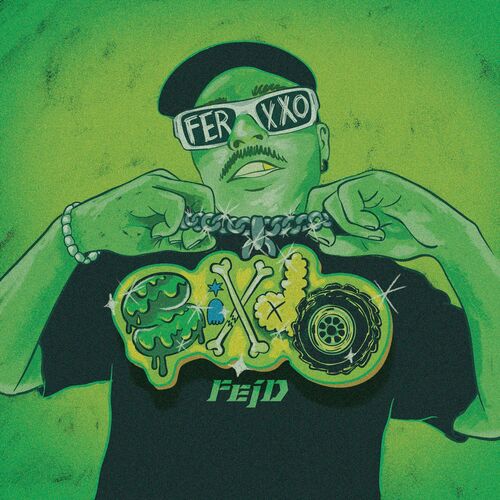
It wasn't a leap into the void. It was a calculated decision, like everything in his career. He released his first EP, Así Como Suena, in 2017, but it was with Ferxxo 100 (2020) that things started to take shape. There was already that sound that defines him: minimalist beats, processed voices like samples, and lyrics that talk about love, but also about loneliness, endless nights, and that feeling that, even when you're surrounded by people, there's always something missing.
The interesting thing is that Feid doesn't compete with the big names in the genre. He doesn't try to be the toughest, the most explicit, or the one who generates the most controversy. His strategy is different: making music that sounds good in the car, at the gym, at the party, but also in that moment when you're alone in your room and need something to keep you company. And that, in a genre as saturated as urban music, is a luxury.
MOR, NO LE TEMAS A LA OSCURIDAD: the album that changed everythingIf there's a before and after in Feid's career, that's MOR, NO LE TEMAS A LA OSCURIDAD (2022). The title is already a statement of intent: "MOR" is not just an abbreviation of "death" in Spanish, but also a nod to that darkness that many prefer to avoid, but that he turns into something attractive. The album is a mix of vulnerability and confidence, of lyrics that talk about heartbreak but with a flow that invites you to dance.
Songs like Ferxxo 1000 or Classy 101 (with Young Miko) became instant anthems. The first one, with that beat that seems taken from a 90s video game, is pure adrenaline; the second one, an experiment in urban pop that works because it doesn't try to be anything more than what it is: a song to sing out loud in the car. And then there's Friki, with Karol G, a song that proved Feid could make pure reggaeton without losing his essence.
The album was a streaming success —one of the most listened to of the year—, but what's most important is that it consolidated his sound. It's not the reggaeton of low blows and repetitive "dembow", but the one with melodies that stick in your head days after listening to them. The one with the details: a piano here, a voice sample there, an unexpected rhythm change. That's what makes him different.
The "ferxxo" phenomenon: more than fans, a tribeFeid doesn't have followers. He has "ferxxos". And that's not a coincidence. From the beginning, he's built an image that goes beyond music: he's the relaxed guy, the one who doesn't need to shout to be heard, the one who shows up to concerts with an aesthetic between sensual and intellectual. He's not the artist who seeks controversy, but the one who prefers his music to speak for him.
His social media is a reflection of that. There are no excessive gym photos, no motivational messages, no obsession with showing a perfect life. Instead, there are memes, photos with friends, and that air of "nothing's happening here, but actually, everything's happening". And that connects. Because in a world where everyone's trying to sell you a life of luxury, Feid sells something harder to find: authenticity.
That being said, not everything has been easy. In 2023, his relationship with Karol G —one of the biggest artists in the genre— put him in the media spotlight. Suddenly, he was "Karol G's boyfriend", and that, in a world as macho as reggaeton, is no small thing. But Feid didn't let himself be defined by that. He kept making his music, kept being himself, and that, in the end, is what his audience respects the most.
What's next?Feid is not one to stay still. If he's proven anything in these years, it's that he knows how to evolve without losing his essence. His latest work, FERXXO 18+ (2023), is proof of that: more experimental, riskier, with collaborations that range from classic reggaeton to commercial pop. And although some genre purists criticize him for "selling out", the truth is that Feid never pretended to be the guardian of tradition. He makes music for the present, not for the past.
What's clear is that Feid is not just another artist in the crowd. He's one of those who arrives and changes the rules without anyone noticing. He doesn't need to shout, or pretend to be the "king of reggaeton". He's enough with that voice that seems to whisper, with those beats that sound like the future, and with that ability to make a song feel like a secret that only you and he share.
And that, in the end, is what makes him great. Not the noise, not the awards, not the millions of streams. But that feeling that, when you listen to Feid, you're listening to something that only he could do.